The Natural Heart Doctor: An Integrative Cardiologist’s Evidence-Based Guide to Holistic Heart Health

Medically reviewed by Dr. Regina Druz, MD, MBA, FACC, FMCP-M — Integrative Cardiologist, Holistic Heart Centers · Last updated: June 2026
The term “natural heart doctor” speaks to a real and growing desire: to care for your cardiovascular system at the root, not just manage numbers with prescriptions. The more important question is whether a natural, holistic approach to heart health is actually backed by science — or whether it is wishful thinking. As an integrative cardiologist, Dr. Regina Druz practices at exactly that intersection, combining the full rigor of conventional cardiology with the nutrition, movement, mind-body, and targeted-supplement strategies that major cardiology guidelines now formally endorse. This guide explains what holistic heart care really means, what the evidence supports, and where the line sits between proof and hype.
A “natural heart doctor” is usually an integrative cardiologist — board-certified in conventional cardiology, who also treats nutrition, movement, stress, sleep, and metabolism to address root causes.
The core pillars are genuinely evidence-based: a Mediterranean-style diet earns the highest (Class I) guideline endorsement, and exercise, stress management, and select supplements all have strong trial support.
Integrative care is an adjunct to — never a replacement for — guideline-directed medication. The two work together, not against each other.
Only three supplements have strong evidence — omega-3, CoQ10, and folic acid. Several others show no benefit, and beta-carotene may cause harm.
What Is a Natural Heart Doctor — and What Does Integrative Cardiology Actually Mean?
“Natural heart doctor” is a popular term for a physician who treats the whole person, not just the disease. The clinical name for this approach is integrative cardiology, and it combines evidence-based conventional cardiovascular medicine with complementary, lifestyle-centered strategies: nutrition, physical activity, mind-body therapies, stress management, sleep, and selectively chosen supplements. The philosophy rests on a simple principle — the body has a powerful capacity to heal and protect itself when given the right conditions, and lasting heart health comes from addressing root causes rather than treating symptoms in isolation.
This is not fringe medicine. The American College of Cardiology has published an Expert Consensus Document on complementary and integrative medicine, and the American Heart Association has issued multiple scientific statements supporting specific integrative approaches. The defining feature of integrative cardiology is that it positions these strategies as adjuncts to — never replacements for — guideline-directed medical therapy. A genuine integrative cardiologist does not ask you to choose between a statin and a Mediterranean diet; they build a plan that uses each where it is warranted.
Does Holistic Heart Care Actually Work? What the Evidence Shows
The most common misconception about natural heart care is that it lacks scientific support. In reality, the lifestyle pillars of integrative cardiology are among the most rigorously studied interventions in all of medicine — several carry the highest level of guideline endorsement. The table below summarizes where the evidence stands for each major pillar.
| Pillar | What the Evidence Shows | Guideline Status |
|---|---|---|
| Mediterranean / plant-forward diet | Up to 65% fewer cardiac events in secondary prevention (Lyon); 30% fewer major events (PREDIMED) | Class I — 2023 AHA/ACC Chronic Coronary Disease |
| Regular physical activity | Lowers blood pressure and improves insulin sensitivity; cardiac rehab reduces mortality | Recommended — 150 min/week + resistance 2×/week |
| Meditation & mindfulness | Lowers perceived stress and modestly lowers blood pressure; signals of fewer events | “Reasonable adjunct” — AHA 2021 |
| Yoga & tai chi | Improved exercise tolerance and quality of life in heart failure | Adjunctive wellness approach — AHA 2023 |
| Stress management | Major cardiac events 18% vs 33% added to cardiac rehab; group CBT cut recurrences 41% | Routine assessment recommended — 2019 ACC/AHA |
| Omega-3, CoQ10, folic acid | Reduced CV mortality, heart attack, heart-failure mortality, and stroke (targeted) | Strongest supplement evidence — JACC 2022 |
Table 1. Evidence and guideline status for the core pillars of integrative cardiology.
What Is the Best Diet for Heart Health?
Nutrition is the foundation of holistic heart care, and here the evidence is strongest. A Mediterranean-style diet — built on vegetables, fruits, legumes, nuts, whole grains, olive oil, and lean protein — reduced cardiovascular events by up to 65% in secondary prevention in the landmark Lyon Diet Heart Study, and the PREDIMED trial demonstrated a 30% reduction in the combined risk of heart attack, stroke, or cardiovascular death. A network meta-analysis of 40 trials found the Mediterranean pattern reduced all-cause mortality, cardiovascular mortality, stroke, and nonfatal heart attack compared with minimal dietary change.
This is why the 2023 AHA/ACC Chronic Coronary Disease Guideline gives plant-based and Mediterranean-style eating a Class I recommendation — the highest level of endorsement — and why higher dietary fiber intake independently lowers blood pressure, improves insulin sensitivity, and reduces cardiovascular events. The practical principles are straightforward: emphasize whole foods, minimize processed foods and added sugar, keep sodium in check, use olive oil as the primary fat, and let food — not supplements — be the foundation.
How Much Exercise Does Your Heart Need?
Physical activity is a cornerstone of cardiovascular prevention. Guidelines recommend at least 150 minutes per week of moderate-intensity aerobic exercise (or 75 minutes of vigorous activity), plus resistance training at least two days per week. Cardiac rehabilitation combining aerobic and resistance training reduces all-cause and cardiovascular mortality in people with coronary disease, while a sedentary lifestyle and low fitness are strongly associated with higher cardiovascular morbidity and mortality. Combining aerobic and resistance training can lower blood pressure more than weight loss alone would predict. The best exercise, ultimately, is the one you will do consistently.
Can Mind-Body Practices Like Meditation and Yoga Protect Your Heart?
The American Heart Association formally recognized the mind-heart-body connection in a 2021 scientific statement, concluding that psychological health is foundational to cardiovascular health. The evidence breaks down clearly:
- Meditation: decreases perceived stress and anxiety, modestly lowers blood pressure, and improves smoking-cessation rates; several studies report reductions in nonfatal heart attack and mortality. The AHA concluded meditation is a reasonable adjunct given its low cost and risk.
- Yoga and tai chi: improve exercise tolerance and quality of life in heart failure; the AHA’s 2023 statement supports them as adjunctive wellness approaches alongside guideline-directed therapy.
- Mindfulness-based interventions: in people with coronary heart disease, significantly improved depression, anxiety, and perceived stress compared with controls.
How Does Stress Affect Your Heart — and What Actually Helps?
Psychosocial stress, depression, and anxiety are independently associated with worse cardiovascular outcomes, which is why the 2019 ACC/AHA Primary Prevention Guideline recommends routinely assessing adults for psychosocial stressors. The effect of treating stress is measurable: adding stress-management training to cardiac rehabilitation lowered major adverse cardiac events to 18% versus 33%, and group-based cognitive behavioral therapy in post-heart-attack patients reduced recurrent cardiovascular events by 41%.
Sleep belongs in this conversation too — short sleep duration is associated with higher cardiovascular risk, which is one reason sleep is counted among the core pillars of cardiovascular health. Evidence-based tools include slow diaphragmatic breathing, daily mindfulness, protecting 7–9 hours of sleep, and structured behavioral therapy when stress or mood symptoms are significant.
Which Heart Supplements Are Actually Backed by Evidence?
Supplements are where holistic heart care most needs honesty. A JACC meta-analysis spanning more than 800,000 people identified three supplements with the strongest evidence for cardiovascular benefit — and, just as importantly, several that don’t help or may cause harm.
| Supplement | What the Evidence Shows | Verdict |
|---|---|---|
| Omega-3 fatty acids (~1.8 g/day) | Reduced CV mortality, heart attack, and coronary events; strongest evidence among complementary agents in heart failure | Supported |
| Coenzyme Q10 (~50 mg/day) | Reduced all-cause mortality in heart failure across 7 trials | Supported — esp. heart failure & statin users |
| Folic acid | Reduced stroke risk | Supported for stroke risk |
| Vitamin C, D, E, selenium | No effect on cardiovascular events in trials | May suit a personalized regimen |
| Beta-carotene | Associated with increased mortality | Avoid |
Table 2. Evidence for common heart-health supplements (JACC micronutrient meta-analysis, >800,000 participants).
Two cautions matter. First, the 2023 Chronic Coronary Disease Guideline recommends against routine use of nonprescription supplements such as over-the-counter fish oil for event reduction, distinguishing them from prescription omega-3 formulations. Second, herbs and supplements interact with cardiac medications. At Holistic Heart Centers, supplements with real data behind them are used only under clear principles:
- Source only through professional suppliers with transparent regulatory compliance and identifiable sourcing.
- Check every supplement-medication interaction through a national clinical database.
- Tie each supplement to an objective, measurable outcome — then re-test to confirm it is working.
- Prioritize nutrition from whole foods over supplementation wherever possible.
What Are Life’s Essential 8 for Heart Health?
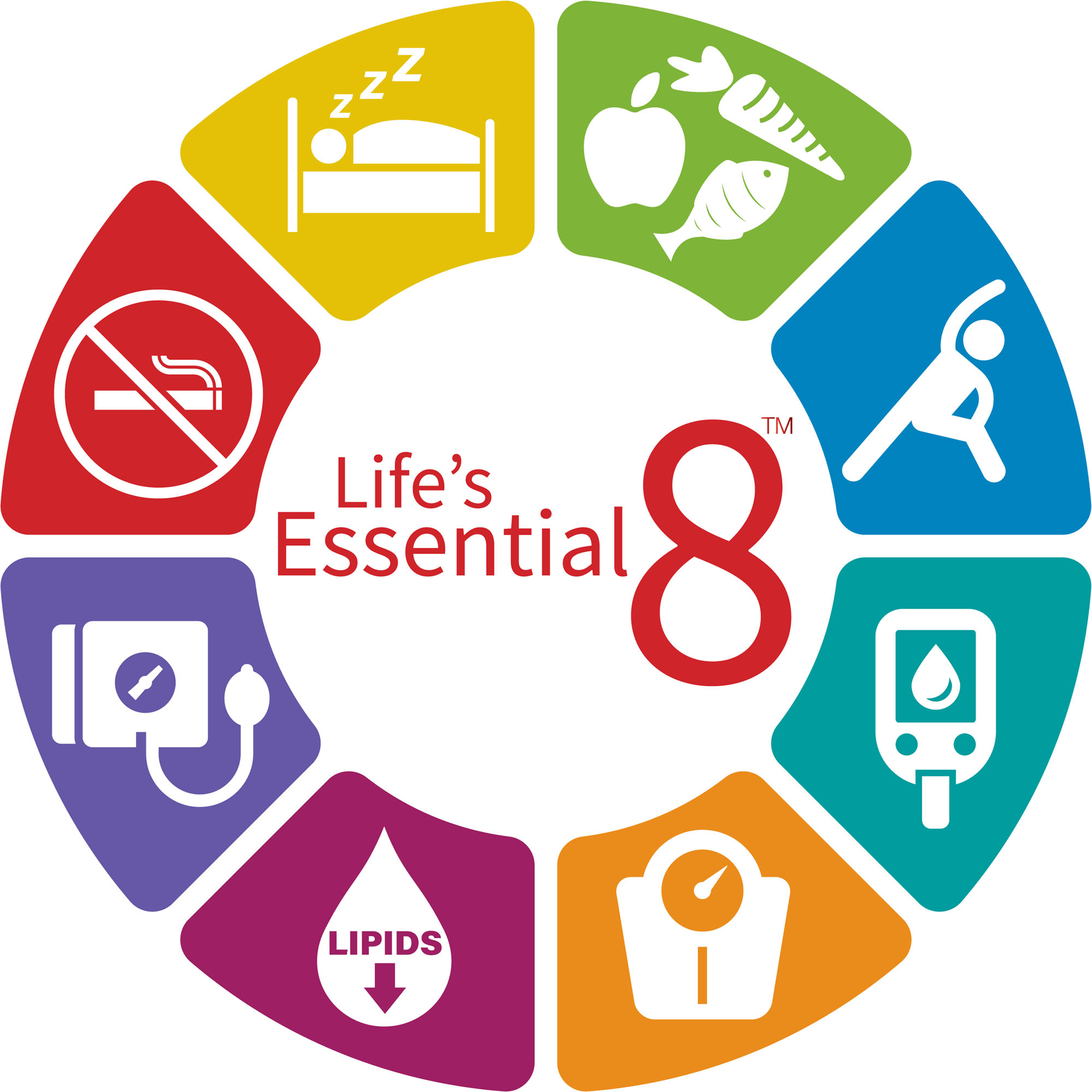
The AHA’s Life’s Essential 8 framework captures holistic heart health in eight modifiable factors: diet, physical activity, tobacco/nicotine exposure, sleep, body weight, blood glucose, cholesterol, and blood pressure. Higher scores show a dose-response relationship with lower mortality from cardiovascular disease, cancer, and other causes — and the largest gains come from moving from low to moderate cardiovascular health. The encouraging takeaway: you don’t have to be perfect. Even modest, sustained improvements deliver meaningful protection.
When Should You See a Cardiologist?
A natural approach complements medical care — it does not replace evaluation when warning signs appear. See a cardiologist promptly if any of the following apply to you:
- Chest pain, pressure, or tightness — especially with exertion
- Shortness of breath that is new, worsening, or occurs at rest
- Palpitations accompanied by lightheadedness, fainting, or a known arrhythmia
- New swelling in the legs, ankles, or feet
- A strong family history of early heart disease, high cholesterol, or sudden cardiac death
- LDL cholesterol above 190 mg/dL, or an Lp(a) level you have never had measured
- Established heart disease, diabetes, or metabolic syndrome that would benefit from a structured prevention plan
Seek emergency care immediately for chest pain with sweating, nausea, or pain radiating to the arm or jaw — these can signal a heart attack.
The Integrative Cardiology Approach at Holistic Heart Centers
Standard cardiology often stops at a basic lipid panel and a prescription. As a board-certified integrative cardiologist, Dr. Regina Druz starts where standard care ends — building a plan around the root drivers of cardiovascular risk. A Holistic Heart Centers evaluation looks beyond the standard panel to include advanced biomarkers such as Lp(a) and ApoB, hsCRP, fasting insulin and HOMA-IR, a full thyroid panel, and, when appropriate, a coronary artery calcium score — then pairs that picture with the nutrition, movement, mind-body, and supplement strategies the evidence supports.
Looking for a natural heart doctor who practices evidence-based, whole-person care?
The Step 1 Explore visit at Holistic Heart Centers includes a comprehensive review of your history and labs, advanced biomarker testing, and a personalized, root-cause prevention plan from Dr. Druz — combining the best of conventional and integrative cardiology. Holistic Heart Centers serves patients in Roslyn, New York City, and nationwide.
Schedule a free call with our patient coordinator →Frequently Asked Questions About Natural and Holistic Heart Care
Is integrative cardiology evidence-based?
Yes. The core pillars — Mediterranean-style nutrition, regular exercise, stress management, and select supplements like omega-3 and CoQ10 — are supported by major cardiology guidelines and large clinical trials. The 2023 AHA/ACC Chronic Coronary Disease Guideline gives plant-based and Mediterranean diets a Class I recommendation, and the AHA’s 2021 mind-heart-body statement endorses meditation as a reasonable adjunct. Integrative cardiology applies these alongside, not instead of, conventional treatment.
Can natural approaches replace heart medication?
For most patients with established heart disease, no — and a responsible natural heart doctor will tell you so. Lifestyle and supplements are adjuncts to guideline-directed therapy. For some people with early or borderline risk, intensive lifestyle change can reduce or sometimes eliminate the need for certain medications, but only under physician supervision with objective monitoring. Never stop a prescribed cardiac medication on your own.
What’s the difference between a natural heart doctor and a regular cardiologist?
A conventional cardiologist focuses primarily on diagnosing and treating cardiovascular disease with medications and procedures. A natural or integrative cardiologist is trained in the same conventional medicine but also systematically addresses nutrition, movement, stress, sleep, and metabolism — and uses advanced biomarker testing to identify root causes. The best integrative cardiologists, like Dr. Druz, are board-certified in conventional cardiology first.
What are the best natural remedies for heart health?
The most effective, evidence-based “natural remedies” are not exotic. They are a Mediterranean-style diet, at least 150 minutes of weekly exercise, stress reduction through mindfulness or meditation, adequate sleep, and a small number of supplements with real data behind them — omega-3 fatty acids, CoQ10, and folic acid for stroke risk. These carry stronger evidence than most herbal products.
Which heart supplements should I avoid?
Beta-carotene supplements have been associated with increased mortality and should be avoided for heart protection. Vitamin C, vitamin D, vitamin E, and selenium have shown no benefit for cardiovascular events in randomized trials but may be appropriate based on personalized functional medicine testing. Always review any supplement with a physician familiar with supplement-medication interactions before adding it, especially if you take cardiac medications.
Do I need to live in Roslyn or New York to work with a holistic cardiologist?
Holistic Heart Centers serves patients in Roslyn and New York City through a structured evaluation pathway that begins with a Step 1 Explore visit. The best first step is to schedule a free call with the patient coordinator to learn how the process works and whether it fits your needs. We partner with patients locally and nationwide.
References
- Vogel JH, Bolling SF, Costello RB, et al. Integrating Complementary Medicine Into Cardiovascular Medicine: ACCF Task Force Expert Consensus Document. J Am Coll Cardiol. 2005;46(1):184–221.
- Levine GN, Cohen BE, Commodore-Mensah Y, et al. Psychological Health, Well-Being, and the Mind-Heart-Body Connection: AHA Scientific Statement. Circulation. 2021;143(10):e763–e783.
- Chow SL, Bozkurt B, Baker WL, et al. Complementary and Alternative Medicines in the Management of Heart Failure: AHA Scientific Statement. Circulation. 2023;147(2):e4–e30.
- Karam G, Agarwal A, Sadeghirad B, et al. Comparison of Seven Popular Structured Dietary Programmes and Risk of Mortality and Major Cardiovascular Events: Systematic Review and Network Meta-Analysis. BMJ. 2023;380:e072003.
- Virani SS, Newby LK, et al. 2023 AHA/ACC/Multisociety Guideline for the Management of Patients With Chronic Coronary Disease. J Am Coll Cardiol. 2023;82(9):833–955.
- Arnett DK, Blumenthal RS, Albert MA, et al. 2019 ACC/AHA Guideline on the Primary Prevention of Cardiovascular Disease. J Am Coll Cardiol. 2019;74(10):e177–e232.
- Buelt A, Selco M, Thompson B. Management of Chronic Coronary Disease: Guidelines From the ACC and AHA. Am Fam Physician. 2024;110(3):315–317.
- Schmidt-Trucksäss A, Lichtenstein AH, von Känel R. Lifestyle Factors as Determinants of Atherosclerotic Cardiovascular Health. Atherosclerosis. 2024;395:117577.
- Kubzansky LD, Huffman JC, Boehm JK, et al. Positive Psychological Well-Being and Cardiovascular Disease: JACC Health Promotion Series. J Am Coll Cardiol. 2018;72(12):1382–1396.
- Lala A, Beavers C, Blumer V, et al. The Continuum of Prevention and Heart Failure in Cardiovascular Medicine: Joint HFSA/ASPC Scientific Statement. J Card Fail. 2025.
- An P, Wan S, Luo Y, et al. Micronutrient Supplementation to Reduce Cardiovascular Risk. J Am Coll Cardiol. 2022;80(24):2269–2285.
- Chua WJ, Liu J, Lam K, et al. The Effectiveness and Safety of Integrative Medicine for Chronic Heart Failure: An Umbrella Review. Complement Ther Med. 2025;91:103182.
- Khorsandi M, Blumenthal RS, Blaha MJ, Kohli P. The ABCs of the 2023 AHA/ACC Guideline for the Management of Patients With Chronic Coronary Disease. Clin Cardiol. 2024;47(5):e24284.
- Huether KM, Pinheiro LC, Judd SE, et al. Association Between Life’s Essential 8 and Cardiovascular, Cancer, and Other Cause Mortality: The REGARDS Study. JACC Adv. 2025;4(6 Pt 2):101731.
More Articles on Heart Disease
-
Can Diet Reverse Heart Disease?
Read more →: Can Diet Reverse Heart Disease?Heart Disease Diet can contribute to reversing heart disease, particularly when it addresses the root causes of atherosclerosis like inflammation, insulin resistance, and oxidative stress. Clinical trials have demonstrated measurable plaque regression with intensive dietary intervention. However, diet alone may not be sufficient for everyone, especially those with advanced disease, genetic risk factors, or significant…
-
What Causes Heart Disease?
Read more →: What Causes Heart Disease?Heart Disease Heart disease is caused by damage to the blood vessels and heart muscle that accumulates over time. While cholesterol often receives the most attention, the actual disease process is driven by a combination of chronic inflammation, metabolic dysfunction, oxidative stress, and arterial damage. These factors interact to create atherosclerosis, the buildup of plaque…
-
Why Is Heart Disease The Leading Cause Of Death?
Read more →: Why Is Heart Disease The Leading Cause Of Death?Heart Disease Heart disease remains the leading cause of death worldwide because it develops silently over decades, is driven by common modern lifestyle factors, and is often detected too late requiring invasive intervention. The cardiovascular system is uniquely vulnerable to the cumulative effects of inflammation, metabolic dysfunction, and arterial damage. Unlike many other diseases, heart…
See all Heart Disease articles → | Back to Heart Health Blog