Your vascular age is not fixed.
Your arteries have an age — and it may be very different from the number on your driver’s license. We specialize in measuring your true vascular age, identifying what’s accelerating arterial aging, and building a precision plan to slow, stop, and in many cases reverse the damage — while the window for meaningful change is still wide open.
Here’s one of the most important things we tell our patients: your chronological age and your vascular age are not the same number. You may be 55 by the calendar and have the arteries of someone who is 70 — or 65 with arteries that look closer to 50. The difference isn’t luck, and it isn’t simply genetics. It’s the cumulative result of everything happening inside your body.
In conventional medicine, vascular aging is often treated as an inevitable consequence of getting older. We reject that narrative entirely. Vascular aging is not a fixed timeline — it’s a modifiable process driven by specific, identifiable biological factors. The question is not whether your arteries will age. The question is how fast, and what you can do about it. That’s what we help you answer.
Your arteries are living tissue, not pipes
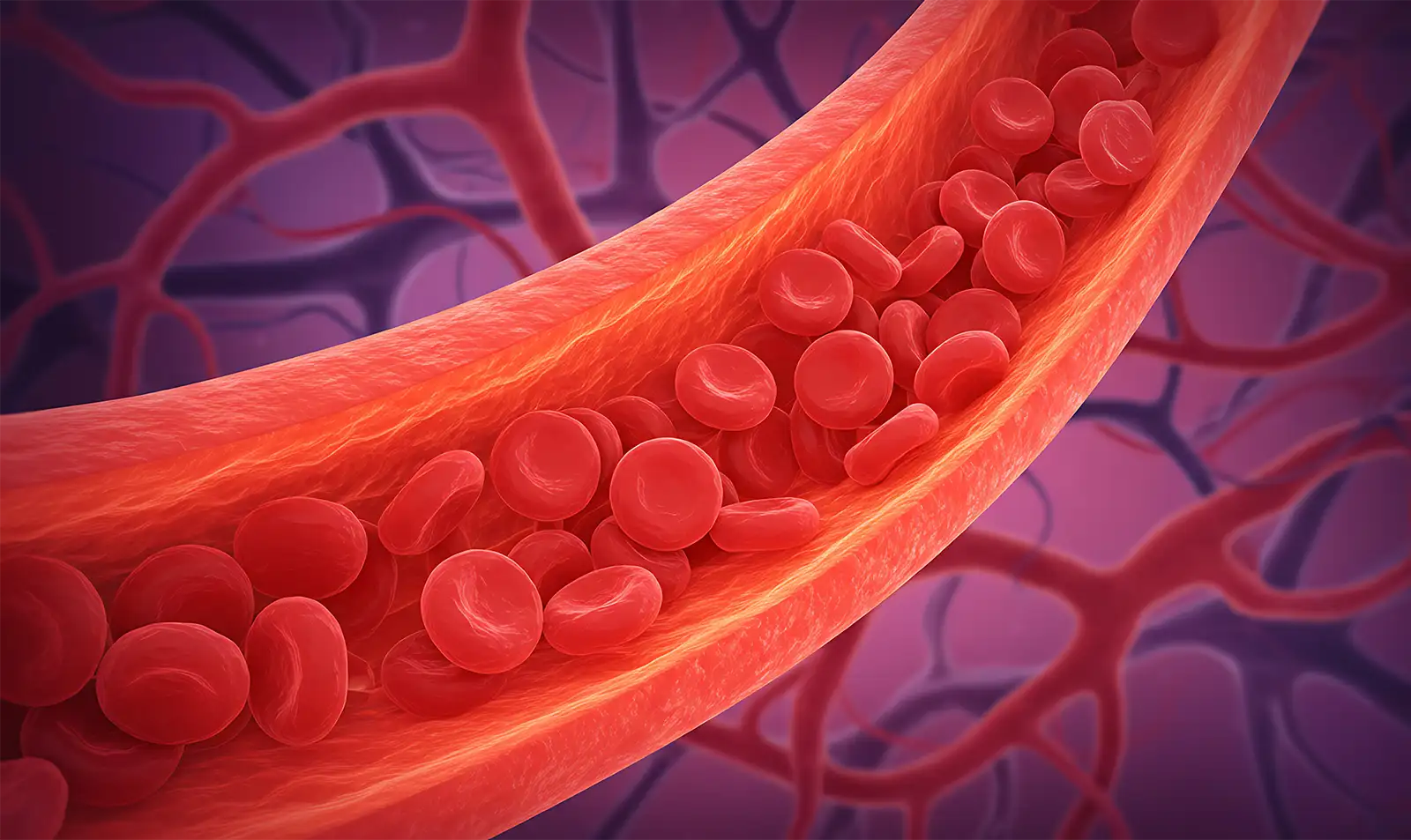
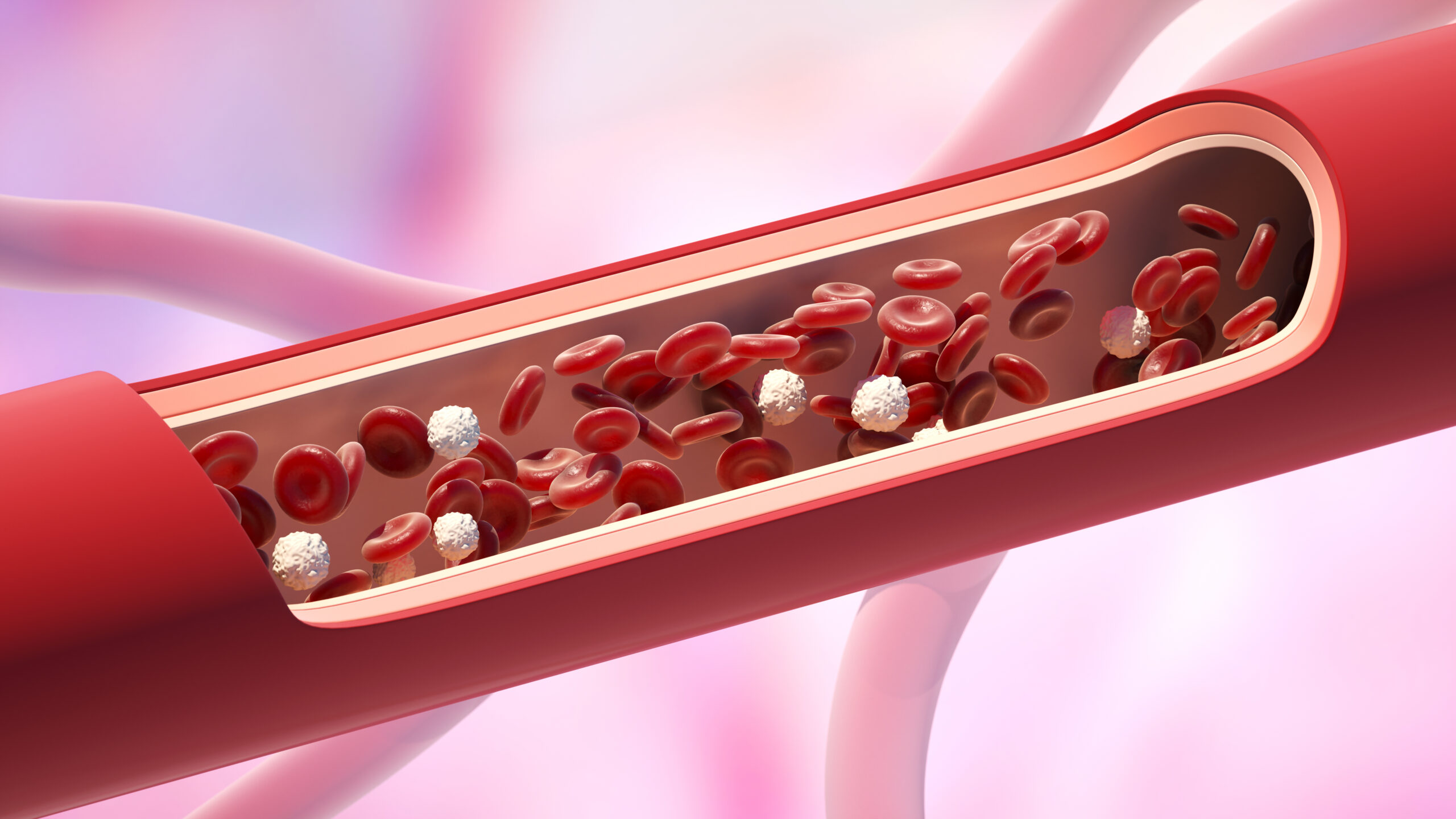
Most people think of their arteries as simple pipes — blood in one end, out the other. But your arteries are complex, living, dynamic organs with their own biology, repair mechanisms, and vulnerabilities. The innermost layer, the endothelium, is a single-cell-thick lining that actively regulates blood pressure (by producing nitric oxide), controls inflammation, determines whether cholesterol can penetrate the wall, manages clotting, and orchestrates repair.
Think of the endothelium as the control center of your vascular health — like the command deck of an airplane. When the instruments work, the flight is smooth. When they malfunction, course corrections come too late. That’s what happens when vascular aging accelerates: the endothelium becomes dysfunctional, nitric oxide declines, artery walls stiffen, inflammation rises, and the damage compounds silently — often without symptoms — until the first sign is a heart attack or stroke. This is why we focus on vascular age rather than simply treating individual risk factors.
Why standard risk factors miss the bigger picture
Conventional medicine manages individual risk factors in isolation: high LDL gets a statin, high blood pressure gets an antihypertensive, high glucose gets metformin. The assumption is that if you bring all the numbers into range, you’ve addressed your risk. But up to 75% of people who have heart attacks do not have classically elevated LDL cholesterol — their numbers looked fine while disease progressed silently.
How? Because standard risk-factor management measures surrogate markers, not what’s actually happening in the vessel wall. It’s like checking the oil level and concluding the engine is fine — the oil might be full, but what about the timing, the compression, the wear on the cylinders? We open the hood. We measure the actual health and function of your arteries using advanced diagnostics that reveal what standard testing cannot — coronary artery calcium scoring, carotid intima-media thickness, and endothelial function testing.
Multiple processes, converging over time.
Premature vascular aging isn’t caused by one factor. It’s the result of multiple biological processes converging, each amplifying the others — and each one identifiable and modifiable. This is where precision cardiology transforms outcomes.
Chronic Inflammation
The single most powerful accelerator — and the one most frequently missed. Not acute inflammation, but chronic, low-grade, systemic “hidden fire” that smolders for years, damaging the endothelium, promoting plaque, and destabilizing it toward rupture. When we cool the fire, the arteries begin to heal.
Insulin Resistance & Metabolic Dysfunction
One of the earliest and most potent drivers — causing arterial damage long before blood sugar becomes abnormal. Chronic hyperinsulinemia directly damages the endothelium, drives oxidative stress, shifts lipids toward small dense LDL, and raises blood pressure. We test fasting insulin in every evaluation.
Oxidative Stress
When reactive oxygen species overwhelm antioxidant defenses, the endothelium is damaged, LDL is oxidized into its most dangerous form, and nitric oxide availability drops — like rust forming inside your blood vessels. Driven by mitochondrial dysfunction, nutrient deficiencies, toxins, smoking, and overtraining.
Hormonal Decline & Imbalance
In women, estrogen loss removes a critical layer of cardiovascular protection — vascular aging accelerates sharply. In men, declining testosterone drives visceral fat and insulin resistance. Thyroid, cortisol, and growth hormone changes compound the effect. Hormones are among the most important regulators of vascular health.
Stress, Sleep & Autonomic Dysregulation
Not soft risk factors. Chronic stress keeps cortisol elevated, promoting endothelial dysfunction and a prothrombotic state; sympathetic overdrive keeps vessels constricted. Your arteries age faster when you don’t sleep — deep sleep is when endothelial repair happens. Sleep apnea adds direct injury.
Genetics, Epigenetics & Toxins
Variants affect cholesterol processing, inflammation, clotting, and Lp(a) — but your genetic code is a blueprint, not a destiny, and lifestyle powerfully shapes gene expression. Heavy metals, endocrine disruptors, mycotoxins, and air pollution directly damage the endothelium and add to the total burden.
The consequences of accelerated vascular aging
Premature vascular aging is not abstract — it has direct, measurable, potentially devastating consequences. The stiffened, inflamed, dysfunctional arterial wall becomes the substrate for nearly every major cardiovascular condition:
- Atherosclerosis & coronary artery disease — plaque builds and destabilizes, leading to heart attacks and the need for stents or bypass.
- Hypertension & arterial stiffness — vessels can’t accommodate each pressure wave, so blood pressure rises and the heart works harder.
- Stroke & cerebrovascular disease — carotid plaque, small-vessel disease, and impaired cerebrovascular reactivity, plus cognitive decline.
- Heart failure — arterial stiffness and hypertension increase afterload, contributing to both HFpEF and HFrEF.
- Peripheral vascular disease — reduced blood flow to the extremities, from leg pain to non-healing wounds.
The critical insight: all of these share the same upstream drivers. When we address vascular aging at its root, we simultaneously reduce risk for all of them. That’s the power of a unified, root-cause approach.
Signs your arteries may be aging faster than you are
Premature vascular aging is often completely silent — arteries don’t have pain receptors, so the first symptom is frequently a heart attack or stroke. That’s exactly why proactive assessment is so critical. Still, these patterns appear frequently in patients whose vascular age exceeds their chronological age:
- Blood pressure creeping upward, especially if it was always normal before
- Declining exercise tolerance — earlier fatigue, more breathlessness, slower recovery
- Erectile dysfunction (often an early sign of endothelial dysfunction, preceding CAD by years)
- Persistent fatigue and brain fog, especially with metabolic symptoms
- Premature skin wrinkling and loss of elasticity (the same collagen/elastin degradation occurs in arteries)
- Family history of premature heart disease, stroke, or sudden cardiac death
- Midsection weight gain; rising cholesterol, blood sugar, or blood pressure despite effort; poor sleep or sleep apnea
From fear to understanding
We understand the particular emotional weight of knowing your cardiovascular risk may be elevated — a strong family history, numbers trending the wrong way, or living after a cardiac event. The anxiety is real, and it’s compounded by a system that often provides more alarm than clarity.
The shift we help our patients make is from fear to understanding, and from understanding to empowerment. When you know your actual vascular age, when you can see what’s happening inside your arteries, the anxiety transforms from vague dread into a defined problem with a defined strategy and measurable progress. When you stop guessing and start measuring, fear gives way to clarity — and clarity is the foundation of meaningful change.
You can’t reverse what you haven’t measured.
Our process begins with comprehensive assessment — because you cannot reverse what you have not measured, and you cannot measure what you are not looking for — then follows a precision framework that addresses every driver of accelerated arterial aging simultaneously.
We measure your vascular age. We don’t guess it.
- Coronary artery calcium (CAC) score — a direct window into calcified plaque burden.
- Carotid intima-media thickness (CIMT) — a radiation-free surrogate for biological vascular age, repeatable over time.
- Endothelial function testing — detects the earliest stage of aging, before plaque is visible.
- Advanced lipid particle analysis — type and behavior, not just quantity.
- Lipoprotein(a) — a genetic, underdiagnosed driver of accelerated atherosclerosis.
- Inflammatory, oxidative-stress & metabolic markers (including fasting insulin).
- Hormonal panels, genetic/epigenetic testing, and environmental toxic burden.
A precision plan for your biology.
- Metabolic restoration — reversing insulin resistance and rebuilding metabolic flexibility.
- Inflammatory modulation — systematically addressing the specific sources of chronic inflammation.
- Hormonal optimization via Fit in Your GENES® — including bioidentical hormone therapy when appropriate.
- Oxidative-stress reduction — targeted antioxidant and mitochondrial support, toxin clearance.
- Endothelial repair & nitric oxide support to restore the artery’s ability to dilate and resist plaque.
- Autonomic regulation & stress resilience — arteries can’t heal in survival mode.
- Nutritional & lifestyle precision built around your genetic and metabolic profile.
From accelerated aging to optimized longevity.
Vascular aging reversal is not a one-time intervention — it’s an ongoing process of monitoring, adjusting, and optimizing. We track inflammatory markers, metabolic parameters, hormonal levels, and imaging findings over time to confirm the trajectory is changing. When arterial thickness stabilizes or decreases on CIMT, when calcium scores stop progressing, when endothelial function improves, when inflammatory markers normalize — these aren’t just data points. They’re evidence that the aging process has been meaningfully altered.
That’s the transformation we work toward with every patient: from arteries that are ten or twenty years older than they should be, to arteries that reflect a biology working in your favor.
Vascular aging, answered.
01 Can vascular aging actually be reversed, or just slowed? +
02 Is vascular aging the same as heart disease? +
03 My cholesterol and blood pressure are normal. Could I still have accelerated vascular aging? +
04 What is Lipoprotein(a) and why does it matter for vascular aging? +
05 How does menopause affect vascular aging? +
06 How is your approach different from what my cardiologist does? +
Your arteries have an age. Let’s find out what it is.
If you’re concerned about your cardiovascular health, have a family history of heart disease, your numbers have been trending the wrong way, or you simply want to understand what’s really happening inside your arteries, we invite you to schedule a free discovery call. We’ll listen to your concerns, explore your health history, and help you determine whether our precision approach to vascular aging is right for you.
Free, no-obligation discovery call. · Call or text 877-511-5166
Speak with a Human →
EVIDENCE
Sources & Citations
+
Biology & Mechanisms of Vascular Aging
- Hamczyk MR, Nevado RM, Barettino A, Fuster V, Andrés V. Biological Versus Chronological Aging: JACC Focus Seminar. J Am Coll Cardiol. 2020;75(8):919–930.
- Paneni F, Diaz Cañestro C, Libby P, Lüscher TF, Camici GG. The Aging Cardiovascular System. J Am Coll Cardiol. 2017;69(15):1952–1967.
- Donato AJ, Machin DR, Lesniewski LA. Mechanisms of Dysfunction in the Aging Vasculature and Role in Age-Related Disease. Circ Res. 2018;123(7):825–848.
- Donato AJ, Morgan RG, Walker AE, Lesniewski LA. Cellular and Molecular Biology of Aging Endothelial Cells. J Mol Cell Cardiol. 2015;89(Pt B):122–35.
- Gkaliagkousi E, Lazaridis A, Dogan S, et al. Theories and Molecular Basis of Vascular Aging (VascAgeNet). Int J Mol Sci. 2022;23(15):8672.
- Ya J, Bayraktutan U. Vascular Ageing: Mechanisms, Risk Factors, and Treatment Strategies. Int J Mol Sci. 2023;24(14):11538.
- Li A, Yan J, Zhao Y, et al. Vascular Aging: Assessment and Intervention. Clin Interv Aging. 2023;18:1373–1395.
Endothelium, Oxidative Stress & Insulin Resistance
- Seals DR, Jablonski KL, Donato AJ. Aging and Vascular Endothelial Function in Humans. Clin Sci (Lond). 2011;120(9):357–75.
- El Assar M, Angulo J, Rodríguez-Mañas L. Oxidative Stress and Vascular Inflammation in Aging. Free Radic Biol Med. 2013;65:380–401.
- Münzel T, Camici GG, Maack C, et al. Impact of Oxidative Stress on the Heart and Vasculature: Part 2. J Am Coll Cardiol. 2017;70(2):212–229.
- Hill MA, Yang Y, Zhang L, et al. Insulin Resistance, Cardiovascular Stiffening and Cardiovascular Disease. Metabolism. 2021;119:154766.
- Kim JA, Montagnani M, Koh KK, Quon MJ. Reciprocal Relationships Between Insulin Resistance and Endothelial Dysfunction. Circulation. 2006;113(15):1888–904.
- Mechanick JI, Farkouh ME, Newman JD, Garvey WT. Cardiometabolic-Based Chronic Disease, Adiposity and Dysglycemia Drivers: JACC State-of-the-Art Review. J Am Coll Cardiol. 2020;75(5):525–538.
Hormones, Sleep & Lifestyle
- El Khoudary SR, Aggarwal B, Beckie TM, et al. Menopause Transition and Cardiovascular Disease Risk: A Scientific Statement From the AHA. Circulation. 2020;142(25):e506–e532.
- Nappi RE, Chedraui P, Lambrinoudaki I, Simoncini T. Menopause: A Cardiometabolic Transition. Lancet Diabetes Endocrinol. 2022;10(6):442–456.
- Moreau KL. Intersection Between Gonadal Function and Vascular Aging in Women. J Appl Physiol. 2018;125(6):1881–1887.
- Lisan Q, van Sloten T, Boutouyrie P, et al. Sleep Apnea Is Associated With Accelerated Vascular Aging. J Am Heart Assoc. 2021;10(15):e021318.
- Cowie MR, Linz D, Redline S, Somers VK, Simonds AK. Sleep Disordered Breathing and Cardiovascular Disease: JACC State-of-the-Art Review. J Am Coll Cardiol. 2021;78(6):608–624.
- Kozakova M, Palombo C. Vascular Ageing and Aerobic Exercise. Int J Environ Res Public Health. 2021;18(20):10666.
- Tsaban G, Shalev A, Katz A, et al. Effect of Lifestyle Modification and Green Mediterranean Diet on Proximal Aortic Stiffness. J Am Coll Cardiol. 2023;81(16):1659–1661.
Measuring Vascular Age: CAC, CIMT & Lp(a)
- Greenland P, Blaha MJ, Budoff MJ, Erbel R, Watson KE. Coronary Calcium Score and Cardiovascular Risk. J Am Coll Cardiol. 2018;72(4):434–447.
- Whelton SP, Blaha MJ. Coronary Artery Calcium: From Risk Prediction to Treatment Allocation and Clinical Trials. Heart. 2023;109(22):1714–1721.
- Kullo IJ, Malik AR. Arterial Ultrasonography and Tonometry as Adjuncts to Cardiovascular Risk Stratification. J Am Coll Cardiol. 2007;49(13):1413–26.
- Townsend RR, Wilkinson IB, Schiffrin EL, et al. Recommendations for Improving and Standardizing Vascular Research on Arterial Stiffness: AHA Scientific Statement. Hypertension. 2015;66(3):698–722.
- Tsimikas S. A Test in Context: Lipoprotein(a). J Am Coll Cardiol. 2017;69(6):692–711.
- Tsimikas S, Marcovina SM. Ancestry, Lipoprotein(a), and Cardiovascular Risk Thresholds: JACC Review Topic of the Week. J Am Coll Cardiol. 2022;80(9):934–946.
- Nordestgaard BG, Langsted A. Lipoprotein(a) and Cardiovascular Disease. Lancet. 2024;404(10459):1255–1264.
Learn More
Guides
Articles
-

How Do I Decrease My Vascular Age?
Vascular Aging Your vascular age reflects how old your arteries actually function compared to your chronological age. Someone who is…
-

Glycocalyx: Hype or Hope? An Integrative Cardiologist Evaluates the Evidence
Coronary Artery DiseaseHeart Attack PreventionHeart DiseaseVascular Aging The glycocalyx — a gel-like layer of proteoglycans and glycoproteins coating the inner…