CoQ10 for Heart Health: Evidence, Dosing, and Why Every Statin User Needs It
CoQ10 for heart health is one of the most evidence-backed supplement recommendations in integrative cardiology — and one of the most routinely overlooked in conventional practice. Coenzyme Q10 is not a fringe supplement. It is an essential mitochondrial cofactor, a potent fat-soluble antioxidant, and the compound directly depleted by statin therapy. Dr. Regina Druz, MD, MBA, FACC, FMCP-M considers CoQ10 status in every cardiac patient — because depleted CoQ10 impairs the energy production capacity of the organ that never stops working.
Coenzyme Q10 (ubiquinone) is found in every cell of the body but is most concentrated in tissues with the highest energy demands — cardiac muscle, skeletal muscle, and…
A meta-analysis of 12 randomized controlled trials found CoQ10 supplementation reduced systolic blood pressure by an average of 11 mmHg and diastolic by 7 mmHg — one of…
CoQ10 exists in two forms: ubiquinone (the oxidized form, standard CoQ10) and ubiquinol (the reduced, active antioxidant form).
What Is CoQ10 and Why Does the Heart Need It?
Coenzyme Q10 (ubiquinone) is found in every cell of the body but is most concentrated in tissues with the highest energy demands — cardiac muscle, skeletal muscle, and the liver. In the mitochondria, CoQ10 serves as the electron carrier between complexes I/II and complex III of the electron transport chain, facilitating the production of ATP — the cell’s energy currency. Without adequate CoQ10, mitochondrial energy production is impaired, reducing the efficiency of cardiac contraction and muscle function throughout the body. Secondarily, CoQ10 is the primary fat-soluble antioxidant protecting cell membranes and LDL particles from oxidative damage.
CoQ10 Benefits for Heart Health: The Clinical Evidence
Blood Pressure Reduction
A meta-analysis of 12 randomized controlled trials found CoQ10 supplementation reduced systolic blood pressure by an average of 11 mmHg and diastolic by 7 mmHg — one of the largest blood pressure effects of any supplement, comparable to single-drug antihypertensive therapy. The mechanism involves improved endothelial nitric oxide production and reduced oxidative inactivation of NO. Effects are most pronounced in patients with existing hypertension and are typically visible at 8–12 weeks of consistent supplementation.
Heart Failure
The Q-SYMBIO trial — a multicenter randomized controlled trial of 420 patients with moderate-to-severe heart failure — found CoQ10 supplementation (300 mg daily) over 2 years significantly reduced major adverse cardiovascular events (15% vs. 26% in placebo, p=0.003) and cardiovascular mortality (9% vs. 16%). This is outcomes-level evidence from a well-designed RCT — making CoQ10 one of the most strongly evidenced supplements in cardiovascular medicine. The mechanism is improved mitochondrial energy efficiency in failing cardiac muscle cells.
Statin-Induced CoQ10 Depletion
Statins inhibit HMG-CoA reductase — an enzyme in the mevalonate pathway that produces both cholesterol and CoQ10. Plasma CoQ10 levels drop 40–50% on statin therapy. This depletion is the primary mechanism behind statin-related myalgia and myopathy — and is directly addressable with CoQ10 supplementation. Multiple trials show CoQ10 at 100–400 mg daily reduces statin-associated muscle pain, though results are inconsistent. Given the low risk and clear mechanistic rationale, CoQ10 supplementation is recommended for all statin users at Holistic Heart Centers.
Oxidative LDL Protection
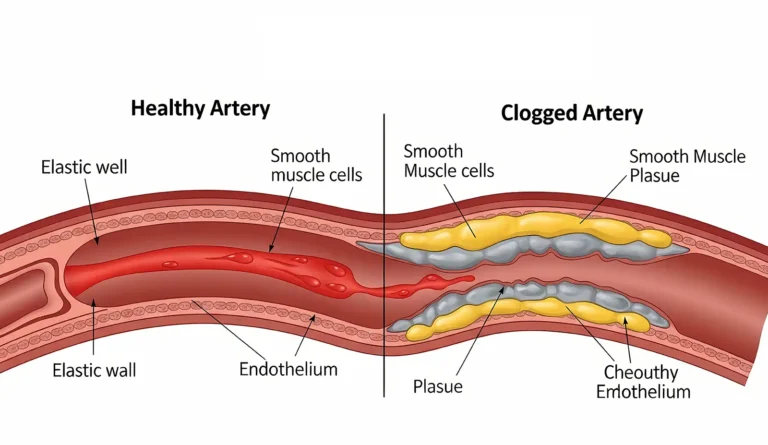
CoQ10 incorporated into LDL particles protects them from oxidation — the initial step in atherosclerotic plaque formation. LDL enriched with CoQ10 is significantly more resistant to oxidation than CoQ10-depleted LDL. This antioxidant function is separate from its mitochondrial role and provides an additional mechanism for cardiovascular risk reduction beyond energy production support.
CoQ10 Forms: Ubiquinone vs. Ubiquinol
CoQ10 exists in two forms: ubiquinone (the oxidized form, standard CoQ10) and ubiquinol (the reduced, active antioxidant form). The body must convert ubiquinone to ubiquinol before it can function as an antioxidant. In healthy young individuals, this conversion is efficient. With age, chronic illness, and high oxidative stress, conversion efficiency declines. For patients over 50, those with heart failure, and statin users, ubiquinol provides superior absorption and clinical effect. Standard dose: 100–200 mg daily of ubiquinol for general cardiovascular support; 300–400 mg daily for heart failure patients (based on Q-SYMBIO dosing).
When to See a Doctor About CoQ10
CoQ10 is well-tolerated with an excellent safety profile. It may modestly reduce the anticoagulant effect of warfarin — patients on warfarin should have INR monitored when starting CoQ10. For patients with established heart failure, CoQ10 should be used as an adjunct to evidence-based medical therapy (ACE inhibitors, beta-blockers, diuretics) — not as a replacement. Discuss with your cardiologist before starting if you have decompensated heart failure or are on multiple cardiac medications.
Want to assess your CoQ10 status and cardiovascular energy profile
The Step 1 Explore visit includes CoQ10 assessment alongside comprehensive cardiovascular biomarker testing.
Schedule a free strategy call →References
- Mortensen SA, et al. The Effect of Coenzyme Q10 on Morbidity and Mortality in Chronic Heart Failure (Q-SYMBIO). JACC Heart Fail. 2014;2(6):641-649.
- Rosenfeldt FL, et al. Coenzyme Q10 in the Treatment of Hypertension. J Hum Hypertens. 2007;21(4):297-306.
More Articles on Heart Disease
-
Can Diet Reverse Heart Disease?
Read more →: Can Diet Reverse Heart Disease?Heart Disease Diet can contribute to reversing heart disease, particularly when it addresses the root causes of atherosclerosis like inflammation, insulin resistance, and oxidative stress. Clinical trials have demonstrated measurable plaque regression with intensive dietary intervention. However, diet alone may not be sufficient for everyone, especially those with advanced disease, genetic risk factors, or significant…
-
What Causes Heart Disease?
Read more →: What Causes Heart Disease?Heart Disease Heart disease is caused by damage to the blood vessels and heart muscle that accumulates over time. While cholesterol often receives the most attention, the actual disease process is driven by a combination of chronic inflammation, metabolic dysfunction, oxidative stress, and arterial damage. These factors interact to create atherosclerosis, the buildup of plaque…
-
Why Is Heart Disease The Leading Cause Of Death?
Read more →: Why Is Heart Disease The Leading Cause Of Death?Heart Disease Heart disease remains the leading cause of death worldwide because it develops silently over decades, is driven by common modern lifestyle factors, and is often detected too late requiring invasive intervention. The cardiovascular system is uniquely vulnerable to the cumulative effects of inflammation, metabolic dysfunction, and arterial damage. Unlike many other diseases, heart…
See all Heart Disease articles → | Back to Heart Health Blog