Understanding & reversing heart disease.
Heart disease is the leading cause of death worldwide — yet much of it is preventable, and even reversible, when the root causes are found early. We look beyond traditional risk factors to uncover what’s actually driving cardiovascular damage, then treat it with precision.

Heart disease doesn’t announce itself with a warning letter. It builds silently over decades, often revealing itself only when a heart attack or stroke has already occurred. By then, significant damage has been done.
But here’s what gives us hope: heart disease is largely a lifestyle-driven condition, which means it responds to lifestyle-driven solutions. When we identify the underlying factors fueling disease progression and address them systematically, remarkable things become possible. Arteries can heal. Plaques can reverse. Risk can be dramatically reduced. And patients who once felt their fate was sealed discover they have far more control than they ever imagined.
What is heart disease?
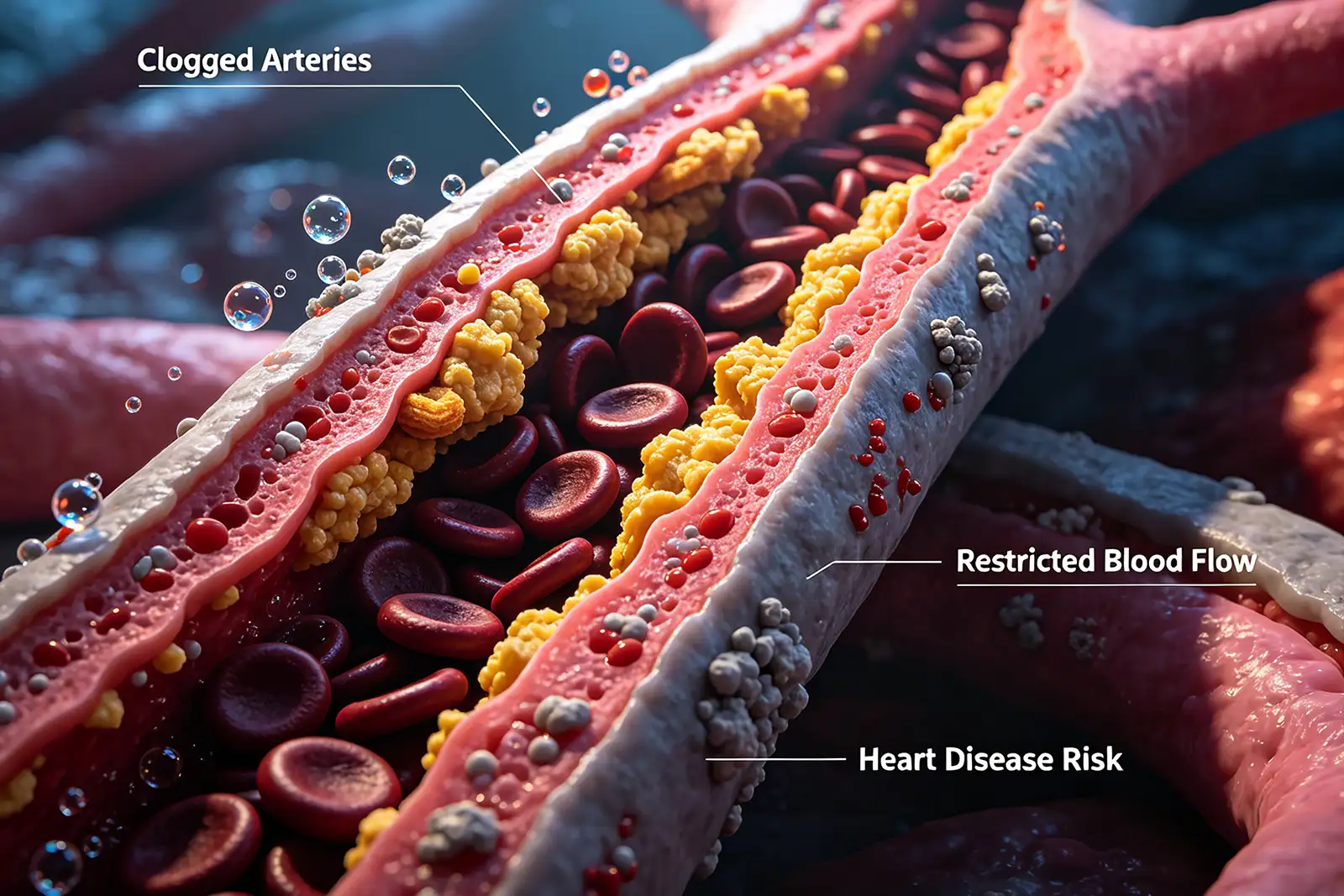
Heart disease is an umbrella term covering several conditions that affect the heart and blood vessels. The most common form is coronary artery disease (CAD), where plaque builds up inside the arteries that supply blood to the heart muscle. Over time, this buildup can restrict blood flow, starve the heart of oxygen, and lead to chest pain (angina), heart attacks, heart failure, or sudden cardiac death.
Other forms of heart disease include:
- Heart failure: The heart becomes too weak or stiff to pump blood effectively.
- Arrhythmias: Abnormal heart rhythms including atrial fibrillation.
- Valvular heart disease: Problems with the heart’s valves that control blood flow.
- Peripheral artery disease: Plaque buildup in arteries outside the heart, particularly in the legs.
- Cardiomyopathy: Diseases of the heart muscle itself.
While these conditions differ in their specifics, they often share common underlying drivers. Understanding those drivers is key to effective prevention and treatment.
Symptoms of heart disease
Heart disease can progress for years without obvious symptoms. When symptoms do appear, they may include:
- Chest pain, pressure, tightness, or discomfort (angina)
- Shortness of breath, especially with exertion or when lying flat
- Fatigue and reduced exercise tolerance
- Heart palpitations or irregular heartbeat
- Swelling in the legs, ankles, or feet
- Dizziness, lightheadedness, or fainting
- Pain radiating to the jaw, neck, shoulder, arm, or back
- Nausea, cold sweats, or indigestion (particularly in women)
Cholesterol is only part of the picture.
Conventional medicine focuses heavily on cholesterol as the primary driver of heart disease. While lipid imbalances certainly play a key role, they’re only part of a much larger picture. We investigate the deeper factors that damage arteries and promote plaque formation.
Chronic Inflammation
Now recognized as a central driver of atherosclerosis. When the inner lining of your arteries (the endothelium) becomes inflamed, it allows cholesterol to penetrate the artery wall and form plaque. Sources include poor diet, excess body fat, chronic infections, autoimmune conditions, environmental toxins, and chronic stress.
Insulin Resistance & Metabolic Dysfunction
When your body becomes resistant to insulin, blood sugar dysregulation promotes inflammation, raises triglycerides, lowers protective HDL, and creates the small, dense LDL particles most likely to cause arterial damage. Insulin resistance is present in the majority of heart disease patients, yet it often goes undiagnosed.
Oxidative Stress
When LDL cholesterol becomes oxidized, it transforms from a normal transport molecule into something far more dangerous — triggering inflammation, damaging the arterial lining, and accelerating plaque formation. Antioxidant deficiencies, toxin exposure, and metabolic dysfunction all contribute.
Hormonal Imbalances
The decline in estrogen during menopause increases heart disease risk in women. Thyroid dysfunction affects heart rate, blood pressure, and cholesterol metabolism. Elevated cortisol from chronic stress promotes visceral fat, insulin resistance, and vascular damage.
Genetic Factors
Some individuals carry genetic variants that increase risk. Elevated Lipoprotein(a), or Lp(a), is a particularly important inherited risk factor affecting roughly 20% of the population. Family history matters — but genetics is not destiny. Understanding your profile allows targeted preventive action.
Compounding Factors
Hypertension, sleep apnea, chronic stress, nutrient deficiencies (magnesium, vitamin D, omega-3s), gut dysbiosis, and environmental toxins each accelerate arterial damage — and frequently travel together. See the full list below.
Additional contributing factors
- Hypertension: High blood pressure damages artery walls and accelerates plaque buildup.
- Sleep apnea: Disrupts oxygen delivery and creates dangerous cardiovascular stress.
- Chronic stress: Keeps the nervous system in overdrive, promoting inflammation and metabolic dysfunction.
- Nutrient deficiencies: Inadequate magnesium, vitamin D, omega-3 fatty acids, and other nutrients impair cardiovascular function.
- Gut dysbiosis: Imbalanced gut bacteria produce inflammatory compounds that affect heart health.
- Environmental toxins: Heavy metals, air pollution, and other toxins contribute to oxidative stress and inflammation.
Living with heart disease risk
If you’ve been diagnosed with heart disease or told you’re at high risk, you may be experiencing:
- Fear about your future and whether you’ll be there for your family.
- Confusion about conflicting advice on diet, exercise, and medications.
- Frustration that you’re doing everything right yet your numbers aren’t improving.
- Overwhelm at the prospect of taking multiple medications for the rest of your life.
- Uncertainty about whether there’s more you could be doing to protect yourself.
These feelings are completely understandable. Heart disease carries enormous emotional weight. But knowledge is power — and when you understand what’s actually driving your cardiovascular risk, you can take meaningful action to change your trajectory.
Precision cardiology, not a generic protocol.
Rather than applying the same protocol to every patient, we dig deep to understand your unique risk profile and create a personalized plan to address it.
We go far beyond a standard cholesterol panel.
- Advanced lipid analysis: particle size, density, and number, plus ceramides, cholesterol metabolism, and HDL functionality.
- Inflammatory markers: hsCRP, Lp-PLA2, MPO, and other indicators of vascular inflammation and plaque instability.
- Metabolic assessment: fasting insulin, glucose, HbA1c, and digital biomarkers of insulin resistance.
- Genetic testing: ApoE, Lp(a), MTHFR, LDLR, ApoB and 400+ cardiovascular risk genes mapped into pathways.
- Hormonal panels: thyroid, cortisol, and sex hormones that impact cardiovascular function.
- Vascular imaging: coronary artery calcium scoring, AI-quantitative CT angiography (Cleerly, HeartFlow), CIMT.
- Functional testing: stress testing, echocardiography, and evaluation of heart function.
A plan built around your results.
- Targeted nutrition: anti-inflammatory eating strategies customized to your metabolic profile.
- Strategic supplementation: evidence-based nutraceuticals for specific deficiencies and risk factors.
- Metabolic optimization: reversing insulin resistance and restoring metabolic flexibility.
- Hormonal balancing: addressing imbalances that impact cardiovascular health.
- Stress & lifestyle optimization: practical strategies for sleep, stress, and nervous-system regulation.
- Detoxification support: reducing toxic burden when indicated.
- Medication management: using pharmaceuticals strategically when needed — optimizing outcomes while minimizing side effects.
Prevention & reversal: what’s possible?
The best time to address heart disease is before it develops. If you have risk factors but no established disease, aggressive prevention can keep your arteries healthy for life.
But what if disease has already developed? Research shows that with comprehensive lifestyle intervention and appropriate medical therapy, atherosclerosis can be stabilized and in some cases reversed. Plaques can become more stable and less likely to rupture. Arterial function can improve. Cardiovascular events can be prevented.
Heart disease, answered.
01 My cholesterol is normal. Does that mean I don’t have heart disease? +
02 Heart disease runs in my family. Am I destined to get it too? +
03 I’ve already had a heart attack. Is it too late to make a difference? +
04 How is your approach different from what my regular cardiologist does? +
05 Will I still need to take medications? +
Your heart doesn’t have to define your future.
Whether you’re looking to prevent disease, understand your risk, or take control after a diagnosis, we’re here to help you navigate the path forward. Schedule a free Heart Health Strategy Session to discuss your concerns and learn how our precision approach can help.
Because when it comes to your heart, knowledge isn’t just power. It’s protection. · Call or text 877-511-5166
Speak with a Human →
EVIDENCE
Sources & Citations
+
Heart Disease Mortality & Prevalence
- Centers for Disease Control and Prevention. Heart Disease Facts.
- Shah NS, et al. Heterogeneous Trends in Burden of Heart Disease Mortality by Subtypes in the United States, 1999–2018. BMJ. 2020;370:m2688.
- King SJ, et al. Heart Disease Mortality in the United States, 1970 to 2022. J Am Heart Assoc. 2025;14(13):e038644.
- GBD 2021 US Burden of Disease Collaborators. The Burden of Diseases, Injuries, and Risk Factors by State in the USA, 1990–2021. Lancet. 2024;404(10469):2314–2340.
- Essa M, et al. Demographic and State-Level Trends in Mortality Due to Ischemic Heart Disease, 1999–2019. Am J Cardiol. 2022;172:1–6.
- Naveed MA, et al. Trends and Disparities in Ischemic Heart Disease Mortality in the United States, 1999–2020. Coron Artery Dis. 2025.
- Joynt Maddox KE, et al. Forecasting the Burden of Cardiovascular Disease and Stroke in the United States Through 2050. Circulation. 2024;150(4):e65–e88.
- Sidney S, et al. Association Between Aging of the US Population and Heart Disease Mortality From 2011 to 2017. JAMA Cardiol. 2019;4(12):1280–1286.
- Sidney S, et al. Recent Trends in Cardiovascular Mortality in the United States and Public Health Goals. JAMA Cardiol. 2016;1(5):594–599.
Preventability of Heart Disease
- Lv J, et al. Adherence to Healthy Lifestyle and Cardiovascular Diseases in the Chinese Population. J Am Coll Cardiol. 2017;69(9):1116–1125.
- Global Cardiovascular Risk Consortium; Magnussen C, et al. Global Effect of Modifiable Risk Factors on Cardiovascular Disease and Mortality. N Engl J Med. 2023;389(14):1273–1285.
- Guo J, et al. Modifiable Influencing Factors and Their Joint Effects on Early- and Late-Onset Coronary Heart Disease. Nat Commun. 2025;16(1):10930.
Plaque Regression & Reversal
- Goldberg IJ, Sharma G, Fisher EA. Atherosclerosis: Making a U Turn. Annu Rev Med. 2020;71:191–201.
- Dawson LP, et al. Coronary Atherosclerotic Plaque Regression: JACC State-of-the-Art Review. J Am Coll Cardiol. 2022;79(1):66–82.
- Parsons C, et al. Reversal of Coronary Atherosclerosis: Role of Life Style and Medical Management. Trends Cardiovasc Med. 2018;28(8):524–531.
- Jhamnani S, et al. Meta-Analysis of the Effects of Lifestyle Modifications on Coronary and Carotid Atherosclerotic Burden. Am J Cardiol. 2015;115(2):268–275.
- Henzel J, et al. High-Risk Coronary Plaque Regression After Intensive Lifestyle Intervention in Nonobstructive Coronary Disease. JACC Cardiovasc Imaging. 2021;14(6):1192–1202.
- Ornish D, et al. Intensive Lifestyle Changes for Reversal of Coronary Heart Disease. JAMA. 1998;280(23):2001–2007.
Chronic Inflammation
- Henein MY, et al. The Role of Inflammation in Cardiovascular Disease. Int J Mol Sci. 2022;23(21):12906.
- Attiq A, et al. Hegemony of Inflammation in Atherosclerosis and Coronary Artery Disease. Eur J Pharmacol. 2024;966:176338.
- Zhao TX, Mallat Z. Targeting the Immune System in Atherosclerosis: JACC State-of-the-Art Review. J Am Coll Cardiol. 2019;73(13):1691–1706.
- Ghattas A, et al. Monocytes in Coronary Artery Disease and Atherosclerosis. J Am Coll Cardiol. 2013;62(17):1541–1551.
- Montarello NJ, et al. Inflammation in Coronary Atherosclerosis and Its Therapeutic Implications. Cardiovasc Drugs Ther. 2022;36(2):347–362.
- Cainzos-Achirica M, et al. Inflammatory Bowel Disease and Atherosclerotic Cardiovascular Disease. J Am Coll Cardiol. 2020;76(24):2895–2905.
- Hansson GK. Inflammation, Atherosclerosis, and Coronary Artery Disease. N Engl J Med. 2005;352(16):1685–1695.
Insulin Resistance & Metabolic Dysfunction
- Mechanick JI, et al. Cardiometabolic-Based Chronic Disease, Adiposity and Dysglycemia Drivers: JACC State-of-the-Art Review. J Am Coll Cardiol. 2020;75(5):525–538.
- Kosmas CE, et al. Insulin Resistance and Cardiovascular Disease. J Int Med Res. 2023;51(3):3000605231164548.
- Ormazabal V, et al. Association Between Insulin Resistance and the Development of Cardiovascular Disease. Cardiovasc Diabetol. 2018;17(1):122.
- Beckman JA, Creager MA, Libby P. Diabetes and Atherosclerosis. JAMA. 2002;287(19):2570–2581.
- Reaven GM, Lithell H, Landsberg L. Hypertension and Associated Metabolic Abnormalities. N Engl J Med. 1996;334(6):374–381.
Oxidative Stress
- Münzel T, et al. Impact of Oxidative Stress on the Heart and Vasculature: Part 2 of a 3-Part Series. J Am Coll Cardiol. 2017;70(2):212–229.
Lipoprotein(a)
- Reyes-Soffer G, et al. Lipoprotein(a): A Genetically Determined, Causal, and Prevalent Risk Factor for ASCVD. Arterioscler Thromb Vasc Biol. 2022;42(1):e48–e60.
- Nordestgaard BG, Langsted A. Lipoprotein(a) and Cardiovascular Disease. Lancet. 2024;404(10459):1255–1264.
- Wong ND, et al. Lipoprotein(a) and Long-Term Cardiovascular Risk in a Multi-Ethnic Pooled Prospective Cohort. J Am Coll Cardiol. 2024;83(16):1511–1525.
- Small AM, et al. Lipoprotein(a), C-Reactive Protein, and Cardiovascular Risk in Primary and Secondary Prevention Populations. JAMA Cardiol. 2024;9(4):385–391.
- Nordestgaard AT, et al. Thirty-Year Risk of Cardiovascular Disease Among Healthy Women According to Clinical Thresholds of Lipoprotein(a). JAMA Cardiol. 2026.
Learn More
Guides
Articles
-

What Heals The Heart Naturally?
Heart Attack Prevention The heart has a remarkable capacity for healing when given the right conditions. Natural healing occurs when…
-
Can Diet Reverse Heart Disease?
Heart Disease Diet can contribute to reversing heart disease, particularly when it addresses the root causes of atherosclerosis like inflammation,…
-
What Causes Heart Disease?
Heart Disease Heart disease is caused by damage to the blood vessels and heart muscle that accumulates over time. While…