Continuous ECG monitoring — catch what a snapshot misses.
Your heart’s electrical system tells a story a single office visit can’t capture. We use advanced ECG monitoring to detect rhythm disturbances, conduction abnormalities, and early warning signs that often go unnoticed on standard testing — turning ECG data into a powerful tool for understanding what’s driving your symptoms and protecting your cardiovascular health.
Palpitations that come and go. A fluttering sensation in your chest. Episodes where your heart races for no apparent reason — or skips a beat when you’re lying in bed at night. Maybe you’ve felt lightheaded, short of breath, or had moments of unexplained fatigue. You’ve mentioned it to your doctor, maybe even had a quick ECG in the office, and were told everything looks fine.
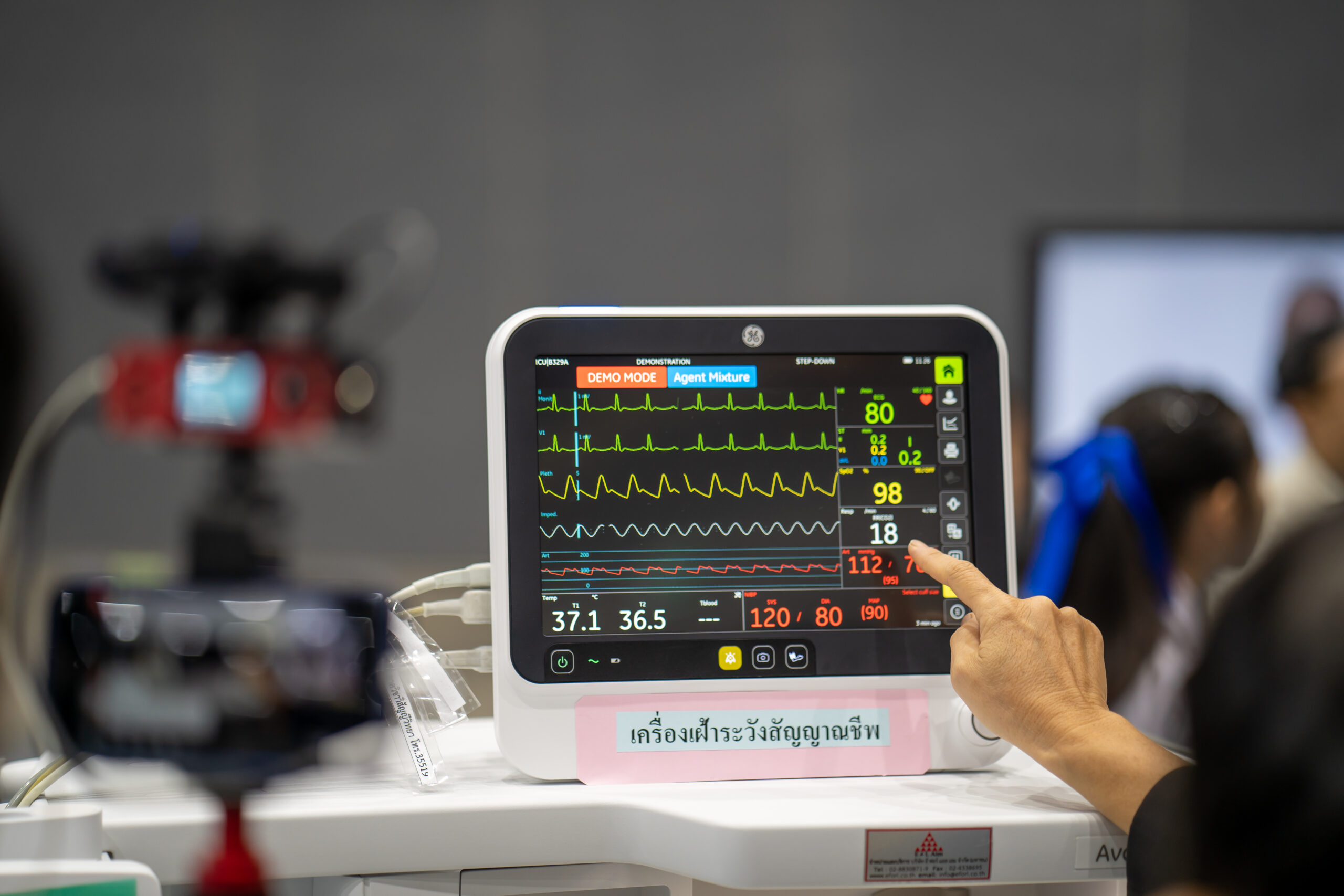
But here’s the problem: a standard 10-second ECG captures only a tiny snapshot of your heart’s electrical activity. It’s like trying to understand a movie by looking at a single frame. If the rhythm disturbance isn’t happening at that exact moment, it won’t show up — leaving you with false reassurance, or lingering anxiety that something is wrong but no one can find it. Extended ECG monitoring changes the picture entirely.
Why a single ECG isn’t always enough
An electrocardiogram is one of the most valuable tools in cardiology — it records the electrical impulses that coordinate each heartbeat, showing rhythm, rate, and conduction in real time. But the standard resting ECG only captures what’s happening in that brief moment, and many of the most clinically important disturbances are intermittent. Atrial fibrillation may come and go unpredictably. Premature beats may cluster at night or during stress. Exercise-induced arrhythmias won’t show up while you’re sitting still in an exam room.
This matters because, through our integrative approach, we’ve learned that rhythm disturbances are often connected to deeper metabolic, hormonal, and inflammatory drivers. A skipped beat isn’t just a random electrical event — it can be a signal that something in the body’s internal environment needs attention. Extended monitoring helps us see those signals clearly so we can act on them.
Living with unexplained symptoms is exhausting
We understand how unsettling it is to feel something wrong with your heart and not have answers. Many of our patients describe experiences like:
- Heart palpitations or a racing heartbeat that comes without warning and disrupts your day
- A sensation of skipped beats or fluttering in your chest that makes you anxious
- Episodes of dizziness, lightheadedness, or near-fainting that no one can explain
- Shortness of breath or chest tightness that seems to come and go on its own
- Being told “it’s just stress” or “it’s just anxiety” without any further investigation
- A normal office ECG that doesn’t match how you feel the rest of the time
- A family history of arrhythmia or sudden cardiac events that makes every irregular beat frightening
These concerns deserve more than a quick reassurance. They deserve a thorough evaluation — and that starts with capturing what your heart is actually doing when symptoms occur.
The right tool for the rhythm you’re chasing.
We use ECG monitoring as one critical piece of understanding your heart in the context of your whole body. Depending on your symptoms, history, and clinical needs, we may recommend one or more of these approaches.
Resting 12-Lead ECG
Immediate information about your heart’s rhythm, rate, and electrical conduction. We use it as a baseline and to evaluate for structural changes, conduction delays, or acute findings — an essential starting point, though limited in duration.
Holter Monitor
Records every heartbeat continuously over one to two days during your normal activities — sleep, exercise, meals, stress. Valuable for detecting intermittent arrhythmias, assessing premature beats and heart rate variability, and correlating rhythm changes with your symptoms.
Extended Event Monitoring
For symptoms that occur infrequently, a lightweight wearable tracks your rhythm over one to four weeks. Press a button when you feel symptoms and the device correlates your experience with the objective recording — a much higher chance of capturing the responsible disturbance.
Exercise Stress ECG
A treadmill test observes how your rhythm, rate, and blood pressure respond to exertion — useful for exercise-induced arrhythmias and assessing whether coronary blockages may impede blood flow. Paired with a peak-exercise echocardiogram, it reveals even more about heart-muscle function.
What your ECG tells us about your whole health.
We don’t read ECG data in isolation — we interpret it in the context of your complete metabolic, hormonal, and inflammatory picture. Rhythm disturbances don’t happen in a vacuum; they’re often connected to root-cause drivers conventional cardiology overlooks.
Electrolyte & Nutrient Imbalances
Deficiencies in magnesium, potassium, and other minerals can directly trigger premature beats and arrhythmias — often correctable once identified.
Inflammation & Oxidative Stress
Chronic inflammation and oxidative stress affect the heart’s electrical tissue, altering ion-channel function and creating the substrate for rhythm disturbances.
Thyroid & Hormonal Shifts
Thyroid dysfunction, cortisol dysregulation, and hormonal changes — especially during menopause — contribute to palpitations, rate changes, and conduction delays.
Insulin Resistance & Metabolic Dysfunction
Metabolic dysfunction creates an internal environment that makes rhythm disturbances more likely — a frequently missed driver of arrhythmia.
Poor Sleep & Sleep Apnea
Untreated sleep apnea is a well-established contributor to atrial fibrillation and other arrhythmias — which is why we evaluate sleep as part of the rhythm picture.
The “Why,” Not Just the “What”
Combining ECG monitoring with the HeartWell Toolkit™, functional-medicine labs, and genetic assessments lets us identify not just what your heart is doing, but why — so we treat the cause, not just the symptom.
Safe, non-invasive, and clinically guided.
All ECG monitoring at Holistic Heart Centers is ordered and interpreted by a board-certified cardiologist with expertise in both conventional and integrative cardiology. ECG testing is non-invasive, painless, and carries no known risks. We use the results in combination with your complete health profile to make informed, evidence-based decisions about your care.
When findings require further evaluation — such as advanced imaging, electrophysiology consultation, or medication adjustment — we coordinate seamlessly with specialists and your primary care team to ensure comprehensive, integrated care.
ECG monitoring, answered.
01 I had a normal ECG at my doctor’s office. Why might I still need monitoring? +
02 What does wearing a monitor feel like? Will it interfere with my daily life? +
03 Can stress or anxiety cause the palpitations I’m feeling? +
04 What happens if the monitor detects something abnormal? +
05 Do I need a referral for ECG monitoring? +
06 Is ECG monitoring available through telehealth? +
Get the complete story your heart is telling.
If you’ve been experiencing palpitations, unexplained symptoms, or simply want a more thorough evaluation of your heart’s rhythm and electrical health, we’re here to help you get answers. Schedule a free Heart Health Strategy Session with our patient coordinator to discuss your symptoms and determine whether ECG monitoring is the right next step for you.
Free strategy session. · Call or text 877-511-5166
Speak with a Human →Learn More
Guides
Articles
-

What Heals The Heart Naturally?
Heart Attack Prevention The heart has a remarkable capacity for healing when given the right conditions. Natural healing occurs when…
-
Can Diet Reverse Heart Disease?
Heart Disease Diet can contribute to reversing heart disease, particularly when it addresses the root causes of atherosclerosis like inflammation,…
-
What Causes Heart Disease?
Heart Disease Heart disease is caused by damage to the blood vessels and heart muscle that accumulates over time. While…