Advanced vascular & fitness testing — precision metrics.
Two of the most powerful predictors of cardiovascular risk and longevity are the structural health of your arteries and your body’s capacity to use oxygen under stress. CIMT imaging reveals the true age of your blood vessels; VO2 max testing measures your cardiovascular fitness at the cellular level. Together, they give us data standard testing simply cannot provide.

In conventional cardiology, risk assessment usually comes down to a handful of numbers: cholesterol, blood pressure, blood sugar. If those look acceptable, you’re told your heart is healthy. But those numbers don’t tell you whether plaque is already building in your arteries, how old your blood vessels actually are, or how efficiently your cardiovascular system performs under real-world demand.
That’s the gap CIMT imaging and VO2 max testing are designed to fill — two of the most validated, evidence-based tools available for understanding your true cardiovascular status. Not based on risk calculators or population averages, but on what’s actually happening inside your body right now. We use them to identify risk earlier, track progress more accurately, and build treatment plans grounded in objective data rather than guesswork.
What is CIMT testing?
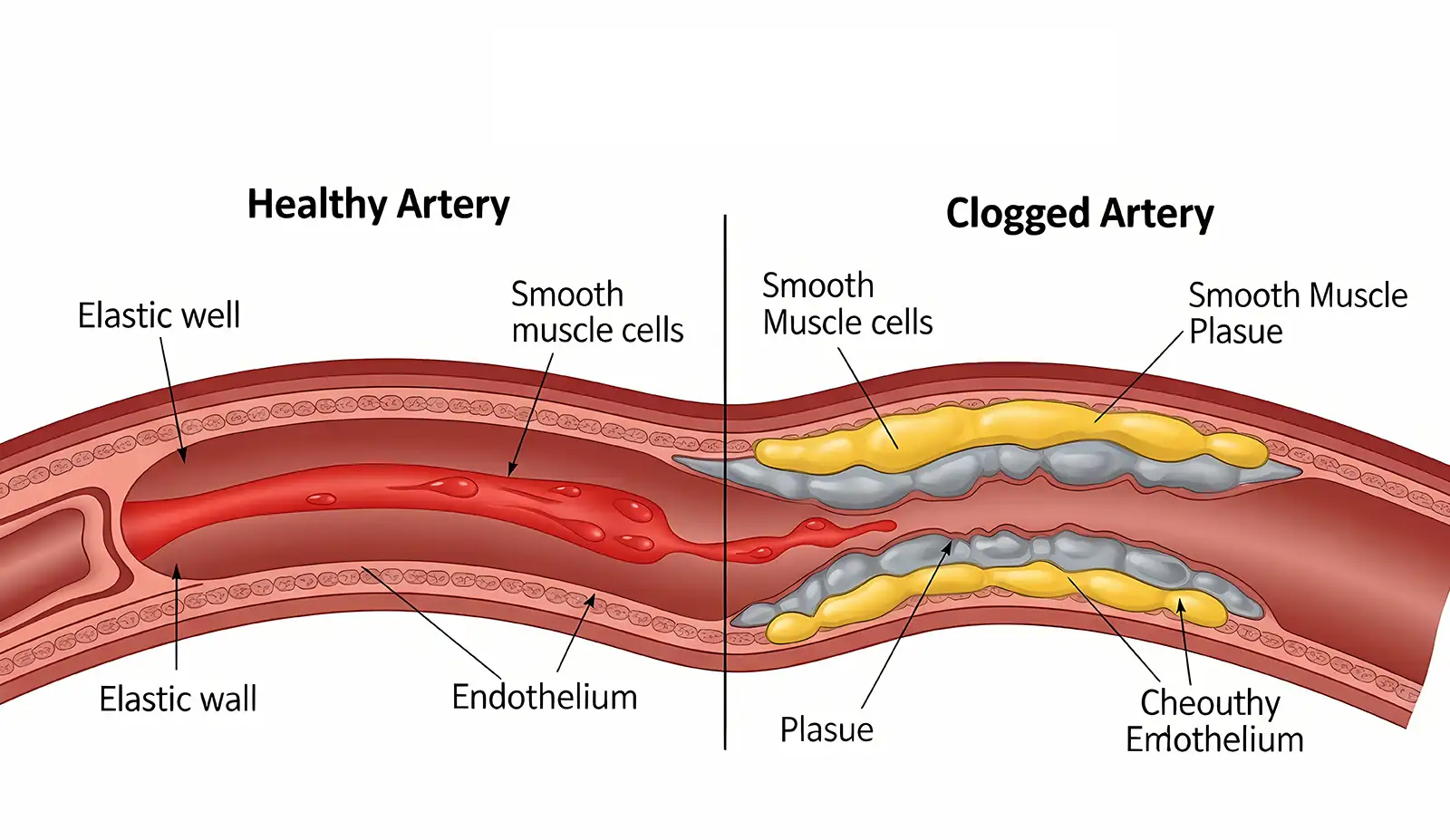
CIMT stands for Carotid Intima-Media Thickness. It’s a non-invasive ultrasound measurement of the inner layers of your carotid arteries — the large vessels on either side of your neck that supply blood to your brain. By measuring the thickness of these arterial walls, we can detect early atherosclerosis long before it would show up on other tests or cause symptoms.
Think of your arteries like the walls of a pipe. Over time, inflammation, oxidative stress, and metabolic dysfunction cause those walls to thicken and stiffen — an early marker of vascular disease that happens gradually, often silently, over years. CIMT lets us see that thickening directly and measure it precisely. The measurement is compared against age- and sex-matched data to determine your vascular age: someone 50 chronologically might have the arterial walls of a typical 40-year-old, or a typical 65-year-old.
What is VO2 max testing?
VO2 max — maximal oxygen uptake — measures the maximum amount of oxygen your body can utilize during intense exercise. It’s the gold standard assessment of cardiopulmonary fitness, reflecting how efficiently your heart, lungs, and muscles work together to deliver and use oxygen under stress.
During the test, you exercise on a treadmill or stationary bike while wearing a mask that analyzes your breathing; the intensity gradually increases until you reach your maximum effort. We measure exactly how much oxygen you consume and how much carbon dioxide you produce — data that reveals your cardiovascular reserve and metabolic efficiency at the cellular level. Your result (ml/kg/min) is compared against age- and sex-matched norms to show where you stand — and where you can improve.
Structure and function, measured directly.
CIMT tells us about the structural integrity and biological age of your arteries. VO2 max tells us about the functional capacity and reserve of your cardiovascular system. Together they answer two questions: how much damage has accumulated, and how resilient is your system?
Detects Subclinical Atherosclerosis
Identifies arterial thickening and early plaque formation years before symptoms develop or standard tests detect a problem — catching vascular aging before it becomes vascular disease.
Determines Vascular Age
Compares your arterial health to population norms to reveal whether your blood vessels are aging faster or slower than expected — and refines risk stratification beyond cholesterol and blood pressure.
Tracks Treatment Response
Provides objective, reproducible measurements that let us monitor whether lifestyle changes, supplements, or medications are improving arterial health over time — with no radiation, no contrast, and no discomfort (a 15–20 minute ultrasound).
Strongest Predictor of Longevity
Research shows cardiorespiratory fitness outperforms most traditional risk factors in predicting lifespan and cardiovascular outcomes. Low fitness is a more powerful predictor of death than smoking, diabetes, or hypertension.
Measures True Cardiovascular Reserve
Reveals how efficiently your heart, lungs, and muscles work together under real physiological demand — and how well your body transitions between burning carbohydrates and fat (your metabolic flexibility).
Guides Exercise Prescription
Provides precise heart-rate zones and training thresholds so you exercise at the intensity that delivers maximum cardiovascular benefit — and tracks fitness improvements objectively, far beyond a standard treadmill stress test.
How we use them together
- We don’t use these tests in isolation — we combine them with advanced biomarkers, metabolic evaluation, and clinical history to build a complete picture.
- If your CIMT shows accelerated arterial aging, we focus on the root causes driving vascular inflammation and plaque formation.
- If your VO2 max reveals diminished reserve, we build a progressive exercise strategy to improve fitness safely — often a coordinated plan addressing structure and function simultaneously.
Precision data for a data-driven approach.
We recommend CIMT and/or VO2 max for patients who want a deeper understanding of their cardiovascular health than standard testing provides — and we make the process clear and comfortable from start to finish.
People who want clarity, not averages.
- Adults over 40 establishing a baseline for longevity planning.
- Those with a family history of heart disease, stroke, or premature events.
- Patients with borderline / intermediate risk where standard tests aren’t decisive.
- Those with metabolic syndrome, insulin resistance, or type 2 diabetes.
- Athletes & active individuals optimizing training with objective data.
- Patients told their labs are “normal” who still feel something isn’t right.
Two straightforward tests.
- CIMT — a painless 15–20 minute ultrasound of your carotid arteries. No fasting, no contrast, no radiation. Results in a few days, reviewed with you in detail.
- VO2 max — treadmill or bike with a metabolic-analyzer mask, 15–25 minutes of exercise. Wear athletic clothing, avoid heavy meals 2–3 hours prior, and skip caffeine that day if possible.
- Comprehensive review — we walk you through your results and how they integrate into your plan within the Fit in Your GENES® framework.
Safety & clinical standards.
CIMT testing is completely non-invasive and carries no known risks — it uses standard ultrasound technology with no radiation or contrast agents. VO2 max testing involves maximal exertion and is performed under clinical supervision with continuous heart-rate and rhythm monitoring.
Before scheduling a VO2 max test, we review your medical history to ensure you’re an appropriate candidate. Patients with certain cardiac conditions, severe hypertension, or other contraindications may require additional evaluation or clearance. All testing is conducted by trained professionals following established safety protocols.
Precision testing, answered.
01 How is CIMT different from a carotid ultrasound that checks for blockages? +
02 I already had a stress test — why would I need VO2 max testing? +
03 Can CIMT results actually change, or is arterial thickening permanent? +
04 What if my VO2 max is low — can it be improved at any age? +
05 How often should these tests be repeated? +
06 Are these tests covered by insurance? +
Move beyond basic lab work.
If you want to understand what’s really happening with your arteries and cardiovascular fitness, CIMT and VO2 max testing can provide the clarity you’re looking for — precision data that helps us identify risk early, guide treatment decisions, and track your progress over time. Schedule a free Heart Health Strategy Session to discuss whether CIMT, VO2 max, or both are appropriate for your situation.
Free, private strategy session. · Call or text 877-511-5166
Speak with a Human →Learn More
Guides
Articles
-

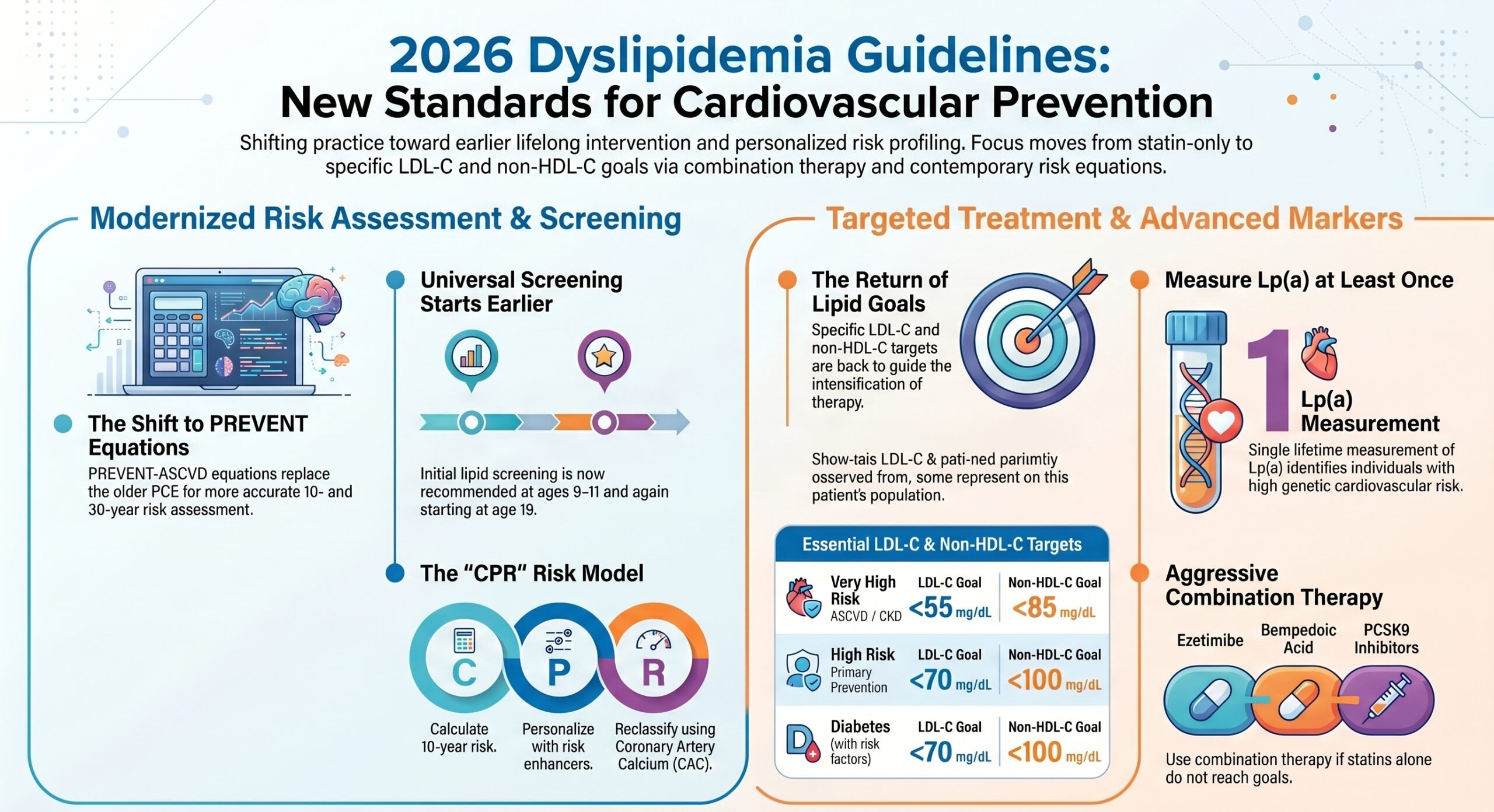
New Cholesterol Guidelines 2026: LDL Targets, Lp(a), and What Changed
Coronary Artery DiseaseHigh Cholesterol & Lp(a) The 2026 ACC/AHA Dyslipidemia Guideline introduces five major changes: a new risk calculator (PREVENT…
-

How Do I Decrease My Vascular Age?
Vascular Aging Your vascular age reflects how old your arteries actually function compared to your chronological age. Someone who is…
-

What Is The Best Way To “Unclog” Your Arteries?
Coronary Artery Disease The idea of “unclogging” arteries is appealing but oversimplified. Arteries are not pipes, and plaque is not…