High blood pressure has root causes. We find them.
High blood pressure is the “silent killer” — it damages your arteries, heart, brain, and kidneys for years before most people notice a single symptom. We go beyond prescribing a pill to investigate the metabolic, inflammatory, hormonal, and lifestyle factors driving your pressure up — then build a plan to bring it down safely and sustainably.

Nearly half of all adults in the United States have high blood pressure — and many of them don’t know it. Hypertension is the single largest modifiable risk factor for heart disease, stroke, kidney failure, and vascular dementia. Yet most patients receive a prescription and a quick reminder to cut back on salt. That approach barely scratches the surface.
Blood pressure is a reflection of what’s happening inside your blood vessels, your metabolism, your nervous system, and your hormonal environment. When we treat only the number, we miss the deeper forces damaging arteries, stiffening vessel walls, and accelerating aging from the inside out. True management requires understanding why the pressure is elevated in the first place.
What is hypertension?
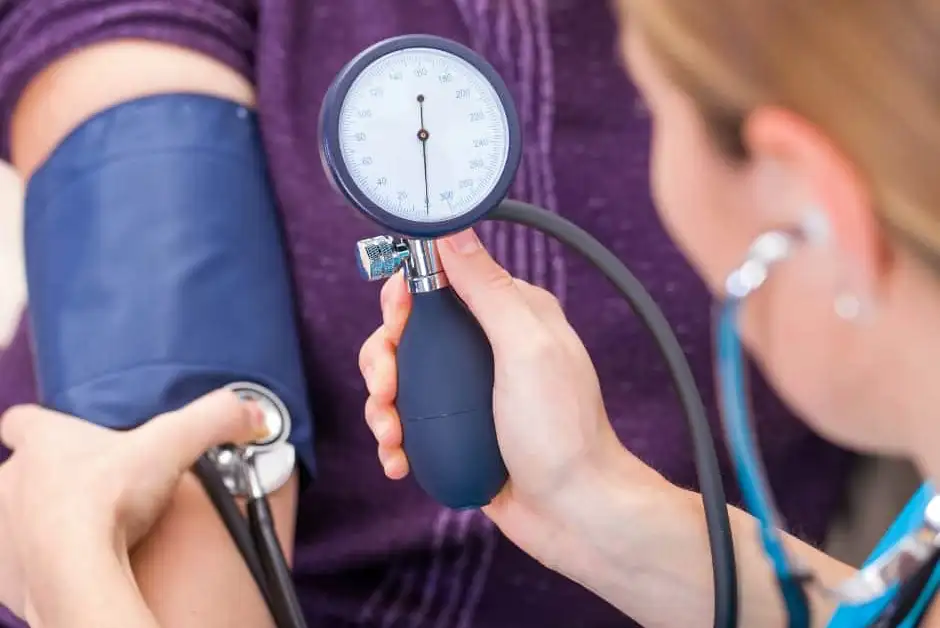
Blood pressure measures the force of blood pushing against your artery walls as your heart pumps. It’s expressed as two numbers: systolic (the force when the heart contracts) over diastolic (the force when it relaxes between beats). Normal is generally below 120/80 mmHg. When blood pressure consistently reads 130/80 mmHg or higher, it’s classified as hypertension.
Hypertension is not a single disease — it exists on a spectrum, and the underlying drivers vary significantly from person to person. Some patients spike primarily from stress and nervous-system activation; others are driven by insulin resistance, arterial stiffness, hormonal shifts, or kidney dysfunction. Identifying the pattern matters, because it determines the most effective path forward.
Types of hypertension
- Primary (essential) hypertension: the most common form (~90–95% of cases). It develops gradually over years, driven by a combination of genetics, lifestyle, metabolic health, and vascular aging — which is precisely why a comprehensive evaluation matters.
- Secondary hypertension: caused by an identifiable underlying condition — kidney disease, adrenal disorders, thyroid dysfunction, sleep apnea, or certain medications. Often appears suddenly, runs higher, and resists standard treatment until the root cause is addressed.
- Resistant hypertension: blood pressure that stays above goal despite three or more medications at optimal doses (one a diuretic). This pattern frequently signals an unidentified metabolic, hormonal, or vascular problem.
- White coat & masked hypertension: some people read high only in clinic (white coat); others read normal in-office but elevated at home or during sleep (masked). Both carry cardiovascular risk and require careful monitoring to detect.
Why blood pressure matters more than you think
High blood pressure doesn’t just raise the risk of a heart attack or stroke. It silently damages the delicate lining of your arteries (the endothelium), promotes plaque buildup, stiffens vessels, enlarges the heart muscle, and impairs blood flow to the brain and kidneys. Over time, this damage compounds — driving coronary artery disease, heart failure, atrial fibrillation, stroke, chronic kidney disease, vascular dementia, and retinal damage.
What makes hypertension so dangerous is that most of this accumulates without symptoms. By the time symptoms appear, significant harm has often already occurred. That’s why early detection and root-cause treatment are so critical.
Symptoms & warning signs
Most people with high blood pressure feel perfectly fine — which is what makes it so insidious. When symptoms do appear, they may include:
- Persistent headaches, especially in the morning
- Dizziness or lightheadedness
- Visual changes or blurred vision
- Shortness of breath during mild exertion
- Nosebleeds
- A pounding or fluttering sensation in the chest
- Disproportionate fatigue, or mental cloudiness and difficulty concentrating
Blood pressure is a signal, not the disease.
Conventional care often treats blood pressure as a numbers problem: if the reading is high, prescribe a medication. But blood pressure is a signal that something deeper is driving vascular dysfunction. We investigate the mechanisms that cause it to rise.
Insulin Resistance & Metabolic Dysfunction
One of the most overlooked drivers. Elevated insulin makes the kidneys retain sodium and water, stimulates the sympathetic nervous system, promotes arterial stiffness, and impairs nitric oxide. Up to 50% of people with hypertension have underlying insulin resistance.
Chronic Inflammation & Oxidative Stress
Inflammation injures the endothelium, the lining that produces nitric oxide to keep vessels flexible. As production drops, vessels become stiff and reactive and pressure rises. Drivers include poor diet, visceral fat, gut dysbiosis, toxins, chronic infections, and stress.
Hormonal Imbalances
Cortisol raises pressure when chronically elevated. Excess aldosterone — even subtle — is a common cause of resistant hypertension. Thyroid disorders affect regulation, and the estrogen decline of menopause removes a protective effect on vessel flexibility.
Autonomic Nervous System Dysregulation
When the sympathetic (“fight or flight”) branch is chronically overactive — from stress, poor sleep, chronic pain, or metabolic dysfunction — pressure stays elevated even at rest. Often worse in the morning, with palpitations, anxiety, and disrupted sleep.
Sleep Apnea
One of the most common and underdiagnosed causes, particularly of resistant hypertension. Repeated oxygen deprivation triggers surges in sympathetic activity, inflammation, and oxidative stress that raise pressure day and night. Snoring, daytime fatigue, and morning headaches are clues.
Arterial Stiffness & Vascular Aging
Arteries lose elasticity with age — accelerated by inflammation, oxidative stress, insulin resistance, and nutrient deficiencies. Stiff arteries can’t absorb each heartbeat’s pulse, raising systolic pressure disproportionately. Pulse wave velocity and CIMT reveal true vascular age.
Additional contributing factors
- Excess sodium intake, particularly in salt-sensitive individuals.
- Low potassium and magnesium levels.
- Heavy metal exposure, especially lead and cadmium.
- Certain medications — NSAIDs, steroids, decongestants, and some antidepressants.
- Chronic kidney disease and genetic variants affecting sodium handling, vascular tone, or adrenal hormone production.
Living with a blood pressure diagnosis
A hypertension diagnosis can feel abstract and confusing. You feel fine, yet you’re told something dangerous is happening inside your body — and for many patients that disconnect makes it hard to take seriously. Others feel a surge of anxiety, checking their pressure repeatedly and watching the numbers fluctuate.
Both responses are understandable. The key is recognizing that high blood pressure is not a character flaw or a failure — it’s your body communicating that something in its internal environment needs attention. When you understand the specific forces driving your blood pressure, the diagnosis stops feeling like a vague threat and becomes something concrete you can address. Many of our patients describe a profound shift once they move from simply taking a pill to actually understanding their cardiovascular health.
A window into your vascular health.
Rather than reaching for a prescription as the first and only step, we conduct a thorough investigation to understand why your blood pressure is elevated — and what it will take to bring it into a healthy range in a way that lasts.
Far beyond a single reading.
- Advanced lipid & inflammatory markers to assess endothelial function and vascular inflammation.
- Fasting insulin & glucose to evaluate insulin resistance and metabolic health.
- Hormonal panels — cortisol, aldosterone, thyroid, and reproductive hormones.
- Kidney function & electrolyte balance.
- Sleep apnea screening via clinical evaluation and home testing when indicated.
- Vascular imaging (CIMT) to measure arterial health.
- Ambulatory / home BP monitoring to capture your true pattern across day and night.
A strategy that targets the cause.
- Targeted nutrition & lifestyle designed for your metabolic profile.
- Anti-inflammatory strategies to protect and restore endothelial function.
- Metabolic support for insulin resistance, body composition, and visceral fat.
- Stress & nervous-system regulation through evidence-based techniques.
- Sleep optimization and treatment of sleep-disordered breathing.
- Hormonal support when imbalances contribute to vascular dysfunction.
- Targeted supplementation — magnesium, potassium, CoQ10, omega-3s. Medication used strategically when needed.
Can hypertension be reversed?
For many patients, yes. When high blood pressure is driven primarily by modifiable factors — insulin resistance, chronic inflammation, poor sleep, stress, hormonal imbalance, or excess body fat — addressing those factors can produce meaningful, sustained reductions. Some patients achieve normal blood pressure without medication; others significantly reduce the number or dosage of medications they take under careful supervision.
The key is that reversal requires identifying and treating the root cause. A patient whose hypertension is driven by sleep apnea won’t improve with dietary changes alone; insulin-driven hypertension won’t respond fully to stress management; and aldosterone excess needs that specific problem identified and treated. This is why precision matters — and why a thorough evaluation is the essential first step.
High blood pressure, answered.
01 My blood pressure is only slightly elevated. Do I really need to worry? +
02 I eat well and exercise regularly. Why is my blood pressure still high? +
03 Can I get off my blood pressure medication? +
04 How is your approach different from a standard cardiology office? +
05 Does menopause affect blood pressure? +
06 What role does stress play in high blood pressure? +
Take control of your blood pressure.
If you’ve been diagnosed with high blood pressure, if it’s not well controlled despite medication, or if you want to understand what’s really driving your cardiovascular risk, we’re here to help. Our approach goes beyond the standard blood pressure check to give you a clear, personalized picture of your vascular health — and a plan that addresses the real causes.
Free, no-obligation discovery call. · Call or text 877-511-5166
Speak with a Human →
EVIDENCE
Sources & Citations
+
Prevalence, Guidelines & Diagnosis
- Muntner P, Carey RM, Gidding S, et al. Potential US Population Impact of the 2017 ACC/AHA High Blood Pressure Guideline. Circulation. 2018;137(2):109–118.
- Sekkarie A, Fang J, Hayes D, Loustalot F. Prevalence of Self-Reported Hypertension and Antihypertensive Medication Use Among Adults — United States, 2017–2021. MMWR Morb Mortal Wkly Rep. 2024;73(9):191–198.
- Carey RM, Muntner P, Bosworth HB, Whelton PK. Prevention and Control of Hypertension: JACC Health Promotion Series. J Am Coll Cardiol. 2018;72(11):1278–1293.
- Jones DW, Ferdinand KC, Taler SJ, et al. 2025 AHA/ACC Guideline for the Prevention, Detection, Evaluation, and Management of High Blood Pressure in Adults. J Am Coll Cardiol. 2025;86(18):1567–1678.
- Charles L, Triscott J, Dobbs B. Secondary Hypertension: Discovering the Underlying Cause. Am Fam Physician. 2017;96(7):453–461.
- Brouwers S, Sudano I, Kokubo Y, Sulaica EM. Arterial Hypertension. Lancet. 2021;398(10296):249–261.
Cardiovascular Risk, Organ Damage & Stroke
- Vasan RS, Song RJ, Xanthakis V, et al. Hypertension-Mediated Organ Damage: Prevalence, Correlates, and Prognosis in the Community. Hypertension. 2022;79(3):505–515.
- He FJ, Tan M, Ma Y, MacGregor GA. Salt Reduction to Prevent Hypertension and Cardiovascular Disease: JACC State-of-the-Art Review. J Am Coll Cardiol. 2020;75(6):632–647.
- Diener HC, Hankey GJ. Primary and Secondary Prevention of Ischemic Stroke and Cerebral Hemorrhage: JACC Focus Seminar. J Am Coll Cardiol. 2020;75(15):1804–1818.
- Bushnell C, Kernan WN, Sharrief AZ, et al. 2024 Guideline for the Primary Prevention of Stroke. Stroke. 2024;55(12):e344–e424.
Insulin Resistance & Metabolic Drivers
- Castro L, Brant L, Diniz MF, et al. Association of Hypertension and Insulin Resistance in Individuals Free of Diabetes in the ELSA-Brasil Cohort. Sci Rep. 2023;13(1):9456.
- da Silva AA, do Carmo JM, Li X, et al. Role of Hyperinsulinemia and Insulin Resistance in Hypertension: Metabolic Syndrome Revisited. Can J Cardiol. 2020;36(5):671–682.
- Reaven GM, Lithell H, Landsberg L. Hypertension and Associated Metabolic Abnormalities — the Role of Insulin Resistance and the Sympathoadrenal System. N Engl J Med. 1996;334(6):374–381.
- Ferrannini E, Cushman WC. Diabetes and Hypertension: The Bad Companions. Lancet. 2012;380(9841):601–610.
Inflammation, Sleep Apnea & Autonomic Activation
- Madhur MS, Elijovich F, Alexander MR, et al. Hypertension: Do Inflammation and Immunity Hold the Key to Solving This Epidemic? Circ Res. 2021;128(7):908–933.
- Zhang Z, Zhao L, Zhou X, Meng X, Zhou X. Role of Inflammation, Immunity, and Oxidative Stress in Hypertension. Front Immunol. 2022;13:1098725.
- Javaheri S, Javaheri S, Somers VK, et al. Interactions of Obstructive Sleep Apnea With the Pathophysiology of Cardiovascular Disease, Part 1: JACC State-of-the-Art Review. J Am Coll Cardiol. 2024;84(13):1208–1223.
- Yeghiazarians Y, Jneid H, Tietjens JR, et al. Obstructive Sleep Apnea and Cardiovascular Disease: A Scientific Statement From the AHA. Circulation. 2021;144(3):e56–e67.
- Grassi G, Pisano A, Bolignano D, et al. Sympathetic Nerve Traffic Activation in Essential Hypertension and Its Correlates. Hypertension. 2018;72(2):483–491.
- Mancia G, Grassi G. The Autonomic Nervous System and Hypertension. Circ Res. 2014;114(11):1804–1814.
Aldosterone, Resistant Hypertension & Menopause
- Carey RM, Calhoun DA, Bakris GL, et al. Resistant Hypertension: Detection, Evaluation, and Management: A Scientific Statement From the AHA. Hypertension. 2018;72(5):e53–e90.
- Bioletto F, Bollati M, Lopez C, et al. Primary Aldosteronism and Resistant Hypertension: A Pathophysiological Insight. Int J Mol Sci. 2022;23(9):4803.
- Carey RM, Moran AE, Whelton PK. Treatment of Hypertension: A Review. JAMA. 2022;328(18):1849–1861.
- Wenger NK, Arnold A, Bairey Merz CN, et al. Hypertension Across a Woman’s Life Cycle. J Am Coll Cardiol. 2018;71(16):1797–1813.
- Samargandy S, Matthews KA, Brooks MM, et al. Trajectories of Blood Pressure in Midlife Women: Does Menopause Matter? Circ Res. 2022;130(3):312–322.
- Nappi RE, Chedraui P, Lambrinoudaki I, Simoncini T. Menopause: A Cardiometabolic Transition. Lancet Diabetes Endocrinol. 2022;10(6):442–456.
Learn More
Guides
Articles
-

Can You Reverse Hypertension?
Hypertension Yes, hypertension may potentially be reversed when you identify and address what is actually driving it. This is fundamentally…
-

What Foods Help Lower Hypertension?
Hypertension The foods that help lower blood pressure are those that address the root causes driving the elevation in the…
-

What Is The Difference Between High Blood Pressure And Hypertension?
Hypertension In medical terminology, high blood pressure and hypertension refer to the same condition: blood pressure that is persistently elevated…