
Step 2: Deep-Dive — advanced testing that finds what standard labs miss.
The goal of Step 2 is not to order tests for the sake of ordering tests. It is to understand exactly what is driving your cardiovascular risk at the cellular level — and build a treatment protocol around that data. We perform a full range of standard and advanced diagnostic testing, combined with functional medicine panels that conventional cardiology never looks at.
The goal of Step 2 is not to order tests for the sake of ordering tests. It is to understand exactly what is driving your cardiovascular risk at the cellular level — and build a treatment protocol around that data. We perform a full range of standard and advanced diagnostic testing, combined with functional medicine panels that conventional cardiology never looks at.
Every test has a clinical purpose
After your Step 1 Explore visit, your care plan outlines which diagnostic testing is most relevant for your cardiovascular profile. Step 2 brings together the best tools available in both conventional cardiology and functional medicine — giving us the most complete picture possible of what is happening inside your heart, arteries, and metabolic systems.
You will always know why each test is being recommended, what we expect it to reveal, and how it will shape your care plan. We never order tests as a formality. Every diagnostic step has a clinical purpose — and you will understand it.
Testing categories
Most Common Cardiac Tests
- Echocardiogram — heart structure, valve function, ejection fraction, and wall motion
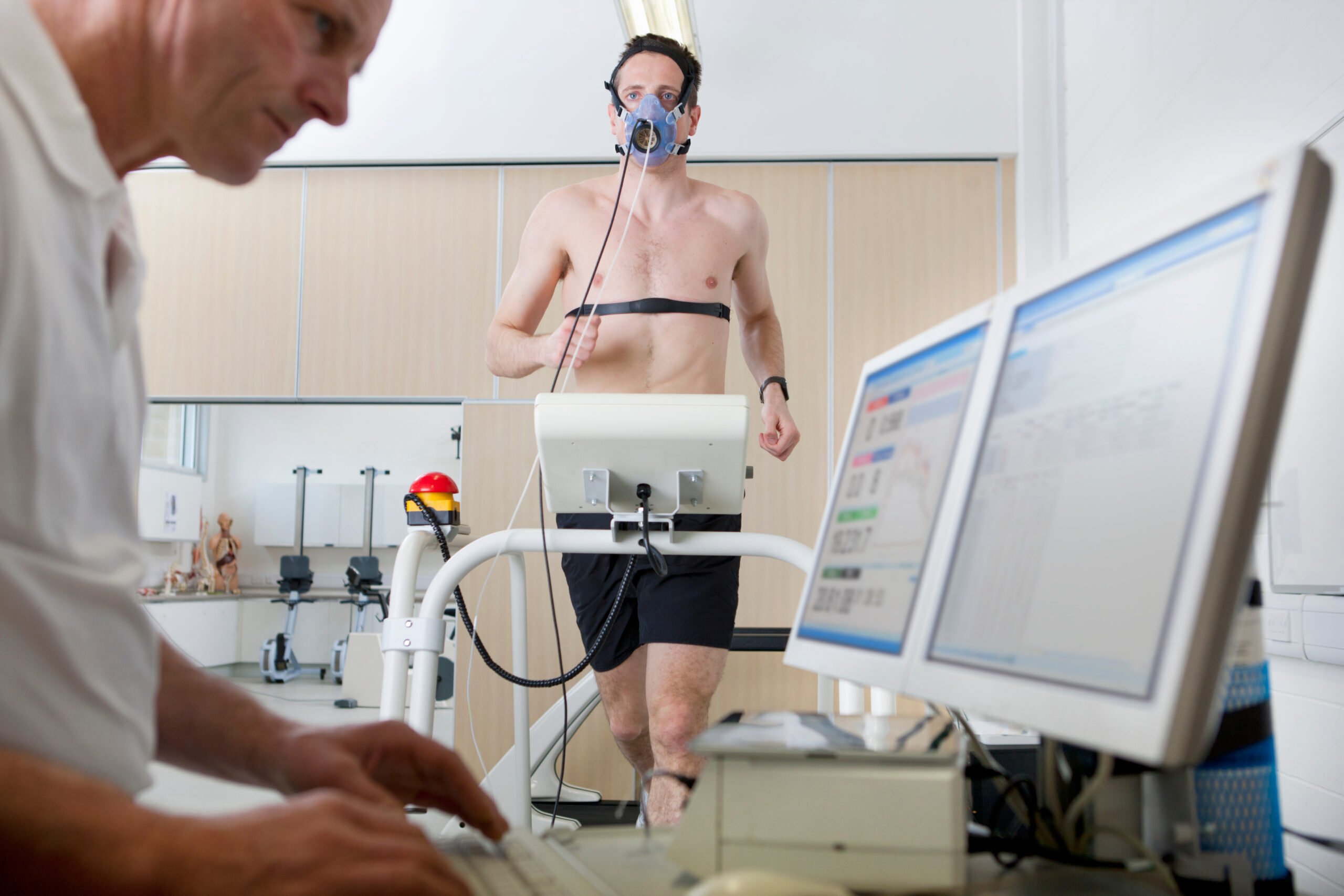
- Treadmill exercise stress test — blood pressure and heart rate response to exertion, exercise-induced arrhythmia detection
- Stress echocardiogram — heart muscle function at peak exercise; identifies blockages affecting blood flow
- 12-lead resting ECG — electrical conduction, rhythm, and baseline heart function
- Extended ECG monitoring — 24-hour Holter, 7–30 day event monitoring for intermittent symptoms
Advanced & Specialized Cardiac Testing
- Nuclear cardiology stress test — heart muscle blood flow and perfusion imaging using low-dose radioactive tracers
- Coronary artery calcium score (CAC / CT heart) — early calcified plaque detection
- CT angiography (CTA) — soft plaque, vessel anatomy, and coronary flow assessment
- CIMT (Carotid Intima-Media Thickness) — arterial wall age and subclinical atherosclerosis
- VO2 Max testing — cardiopulmonary fitness and cardiovascular reserve
- Endothelial function and arterial stiffness testing — blood vessel dilation capacity and early vascular aging
HeartWell Toolkit Testing
- Heart & Brain HeartWell Kit — advanced lipids, inflammation, oxidative stress, endothelial function, omega balance, sterols/ceramides, cardiac stress markers
- Hormone & Metabolism HeartWell Kit — urine and blood hormones, thyroid cascade, endocrine disruptors, metabolic drivers
- Longevity HeartWell Kit — biological age, immune system age, organ aging, cardiovascular genetics
- Foundational Genetic Testing — cholesterol metabolism, glucose, dementia risk, heart disease predisposition
- Executive Genetic Testing — comprehensive cardiovascular, cognitive, detoxification, and longevity genetics
Functional Medicine & Laboratory Testing
These are the tests that standard cardiology practices almost never order — but which frequently reveal the root causes driving cardiovascular disease:
- Advanced lipid particle analysis — LDL particle size and number, Lp(a), ApoB, oxidized LDL, sdLDL, ADMA, TMAO, atherogenic index
- Inflammatory markers — hs-CRP, IL-6, homocysteine, fibrinogen, Lp-PLA2
- Metabolic and insulin signaling — fasting insulin, glucose, HbA1c, HOMA-IR
- Nutritional assessment — vitamins D, B12, omega-3 index, CoQ10, magnesium, zinc
- Full thyroid cascade — TSH, free T3, free T4, reverse T3, thyroid antibodies
- Sex hormones and adrenal cortisol rhythm
- Toxin and heavy metal exposure testing
- Microbiome and gut permeability assessment
- Oxidative stress and biological aging markers
- Genetics for lipids, diabetes, dementia and longevity
Why standard testing misses early disease
The most common cardiac tests — echocardiogram, stress test, standard bloodwork — are excellent tools, but they are designed to detect disease after it has already developed significantly. Early signs of cardiovascular disease are often invisible on these tests.
At HHC, we combine sensitive imaging tools like CIMT and coronary artery calcium scoring with deep functional medicine testing to catch the processes driving vascular disease years before symptoms appear. Our approach is built on a simple principle: the earlier we find it, the more reversible it is.
What comes next
Once your Step 2 testing is complete, Dr. Druz reviews every result in the context of your full clinical picture — your history, your HeartWell Toolkit data, your imaging, and your functional medicine labs. This synthesis forms the foundation of your Step 3 Engage treatment plan.
Step 2, answered.
01What is included in the Step 2 Deep-Dive?+
02Do I need to complete Step 1 before Step 2?+
03How long does Step 2 testing take?+
04Will I receive written results and an explanation?+
05Is there any radiation involved in the tests?+
Related Tests and Services
CIMT & VO2 Max Testing
Arterial wall age and cardiopulmonary fitness — two of the strongest longevity predictors.
LEARN MORE →Coronary Artery Calcium Score & CTA
Non-invasive imaging to detect calcified and soft plaque years before symptoms.
LEARN MORE →ECG Monitoring
Extended rhythm recording — 24-hour Holter, event monitoring, and exercise stress ECG.
LEARN MORE →