Cholesterol is only part of the story.
High cholesterol is one of the most commonly diagnosed cardiovascular risk factors — and one of the most misunderstood. A single LDL number doesn’t tell you whether your arteries are actually in danger. We decode your complete lipid profile with advanced particle analysis, inflammatory markers, metabolic testing, and genetic evaluation — including the Lp(a) that standard panels miss entirely.
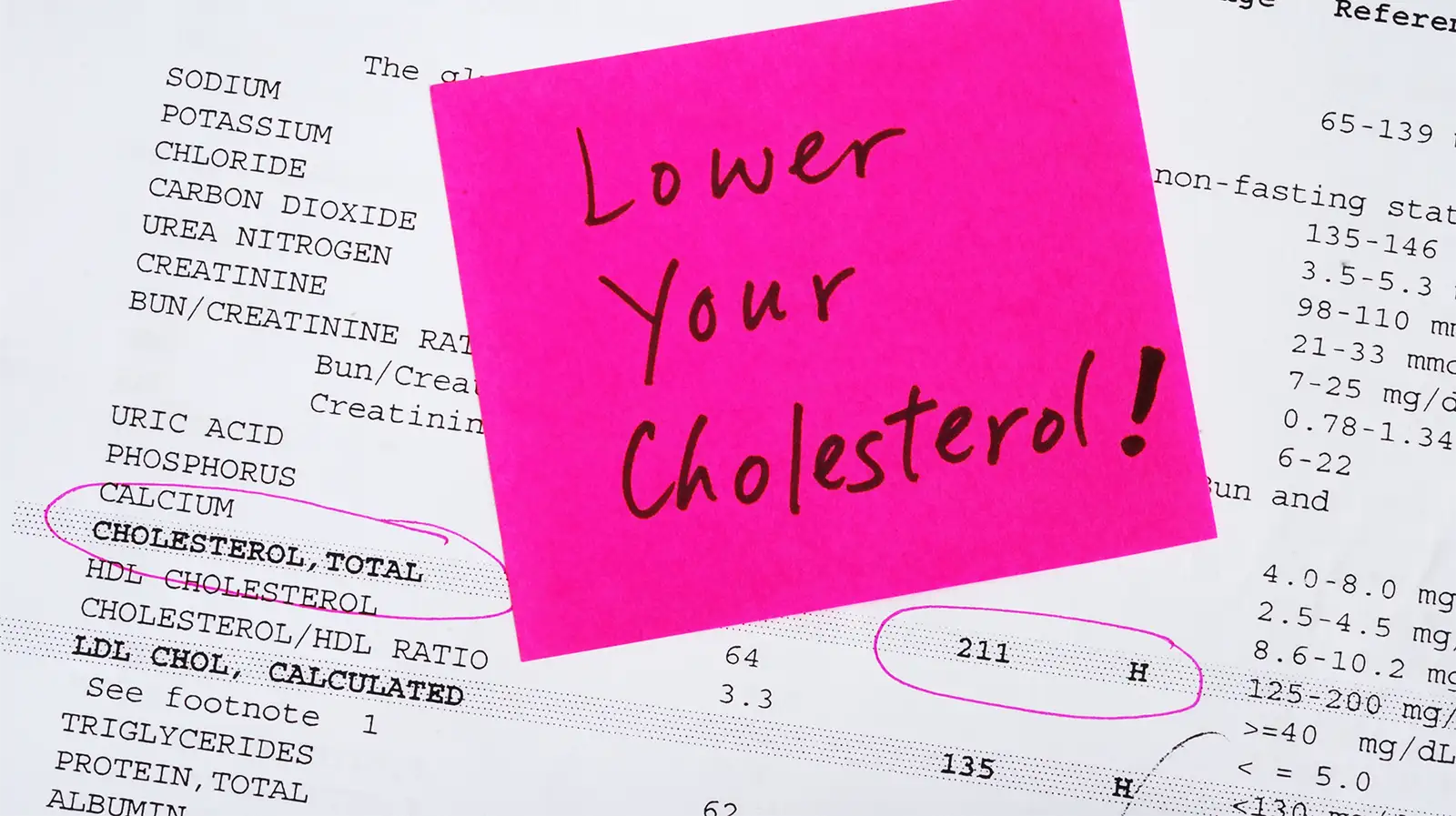
For decades, cholesterol management has followed a simple script: check total cholesterol and LDL, and if the numbers are high, prescribe a statin. This has helped millions reduce their risk — but it has also left millions more with a false sense of security, because the standard panel only tells part of the story.
Here’s the reality that changes everything. 75% of people who suffer a heart attack do not have high LDL cholesterol by conventional standards. Their standard labs looked “normal.” Meanwhile, many people with elevated LDL never develop heart disease at all. The difference is context — the type, size, and behavior of your cholesterol particles, the inflammation in your arteries, your metabolic health, and genetic factors like Lp(a) that standard testing never measures.
Cholesterol: beyond the numbers
Cholesterol is not a toxin. It’s an essential molecule your body produces on purpose — every cell needs it for membrane structure, your brain depends on it, and it’s used to make hormones (estrogen, testosterone, cortisol), synthesize vitamin D, and produce bile acids. It also shows up at sites of arterial damage because it plays a role in tissue repair.
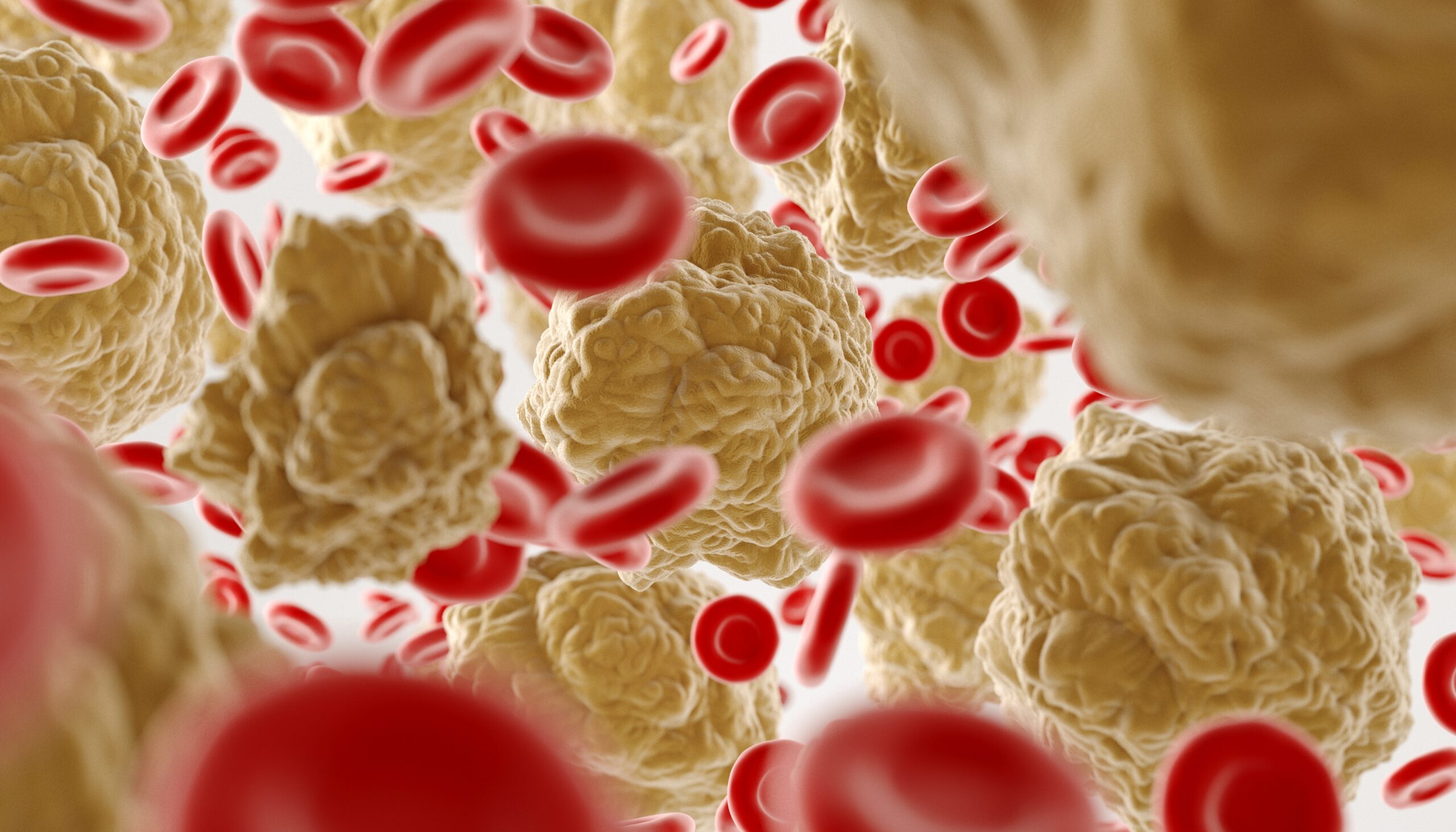
The problem isn’t cholesterol itself — it’s when the system that transports it becomes dysregulated. Cholesterol travels inside protein-wrapped particles called lipoproteins. When certain particles become too numerous, too small, or too easily oxidized, they penetrate the arterial wall and trigger an inflammatory cascade that leads to plaque. Understanding which particles are causing the problem, and why, is the key to effective treatment.
Why the standard lipid panel falls short
A conventional panel measures total cholesterol, LDL, HDL, and triglycerides. These give a rough estimate — but they miss critical detail. Standard LDL doesn’t distinguish large, buoyant particles (generally less harmful) from small, dense ones (far more likely to penetrate the arterial wall). It doesn’t measure the actual number of LDL particles — a stronger predictor of events than cholesterol concentration alone. And it doesn’t test for Lp(a), which affects roughly one in five people.
Relying solely on standard LDL is like judging traffic by the total weight of vehicles rather than the number of cars. Two patients with identical LDL can carry dramatically different risk based on particle size, particle count, inflammation, and genetics.
What is Lipoprotein(a) — and why does it matter?
Lipoprotein(a), or Lp(a), is a specialized LDL particle carrying an additional protein called apolipoprotein(a). What makes it unique is that your level is almost entirely determined by genetics. Unlike standard LDL — which responds to diet, exercise, and statins — Lp(a) is largely unaffected by lifestyle changes and most conventional cholesterol medications.
Elevated Lp(a) is one of the strongest independent genetic risk factors for cardiovascular disease. It promotes plaque buildup, increases arterial inflammation, and impairs the body’s ability to dissolve clots — a triple threat for heart attack and stroke. An estimated 20% of the global population carries elevated Lp(a), yet most have never been tested because it isn’t on a standard panel. A patient can have “perfect” LDL and still carry dangerously elevated Lp(a) without knowing it.
High cholesterol is a signal, not a diagnosis.
High cholesterol is not a diagnosis in itself — it’s a signal that something in your metabolic system needs attention. We investigate what’s actually driving your lipid abnormalities so treatment can be precise and effective.
Insulin Resistance & Metabolic Dysfunction
One of the most powerful, most overlooked drivers. Insulin resistance makes the liver produce more triglyceride-rich particles, shrinks LDL to small dense forms, drops HDL, and raises particle count — “atherogenic dyslipidemia,” far more dangerous than a mildly elevated LDL alone.
Chronic Inflammation
Plaque begins with damage to the endothelium — and inflammation is the primary driver. When the lining is inflamed, small dense LDL penetrates and oxidizes, triggering plaque. A patient with moderate LDL but high vascular inflammation may be at greater risk than one with high LDL and low inflammation.
Hormonal Influences
Thyroid hormones directly affect how the liver clears LDL — even subclinical hypothyroidism raises cholesterol. The estrogen decline of menopause shifts particles smaller and denser and lowers HDL function. Cortisol drives insulin resistance and visceral fat, worsening the profile.
Genetic Factors
Familial hypercholesterolemia (FH) impairs the liver’s ability to clear LDL, causing very high levels from a young age. Other variants affect gut absorption, liver synthesis, HDL function, and Lp(a) production. Genetic testing clarifies whether your pattern is lifestyle-driven, genetic, or both.
Oxidative Stress & Toxin Burden
Oxidative stress damages LDL particles, making them more likely to trigger inflammation and plaque. Environmental toxins, heavy metals, poor diet, chronic infections, and antioxidant deficiencies (vitamin E, CoQ10, glutathione) all increase the burden — an essential but neglected piece.
Gut Health & the Microbiome
The microbiome influences bile acid recycling, cholesterol absorption, inflammatory signaling, and TMAO production linked to cardiovascular risk. Dysbiosis can contribute to both inflammation and unfavorable lipid patterns — for some patients, an important piece of the puzzle.
Symptoms & warning signs
High cholesterol itself produces no symptoms — no pain, no fatigue, no visible sign — until the damage has progressed to a critical point. By the time symptoms appear (chest pain, shortness of breath, or a cardiovascular event), significant arterial damage has often already occurred. There are, however, indirect warning signs that should prompt a thorough lipid evaluation:
- A family history of premature heart disease (heart attack or stroke before 55 in men, 65 in women).
- Unexplained erectile dysfunction, which can be an early sign of vascular disease.
- Yellowish deposits around the eyelids (xanthelasma) or tendons (xanthomas).
- Any combination of elevated triglycerides, low HDL, abdominal weight gain, and blood sugar abnormalities.
The frustration of “managing” cholesterol
Few diagnoses generate as much confusion and conflicting advice. You may have been told to take a statin for life, only to read alarming headlines about side effects. You may have changed your diet drastically and seen little improvement. You may have a family member who had a heart attack despite “normal” cholesterol — leaving you wondering whether the tests you’re getting even measure the right things.
These are legitimate concerns, not signs of non-compliance. Cholesterol science has advanced enormously, but the way most practices test and treat it has not kept pace. Patients deserve more than a single number and a prescription — a clear explanation of what their cholesterol is actually doing, why, and the most effective personalized strategy to protect their arteries.
One piece of a much larger puzzle.
Our goal is not simply to lower a number. It’s to understand your complete lipid biology, identify the forces driving your risk, and build a strategy that protects your arteries for the long term.
Far beyond a standard panel.
- Cholesterol particle analysis — number, size, and density for true atherogenic risk.
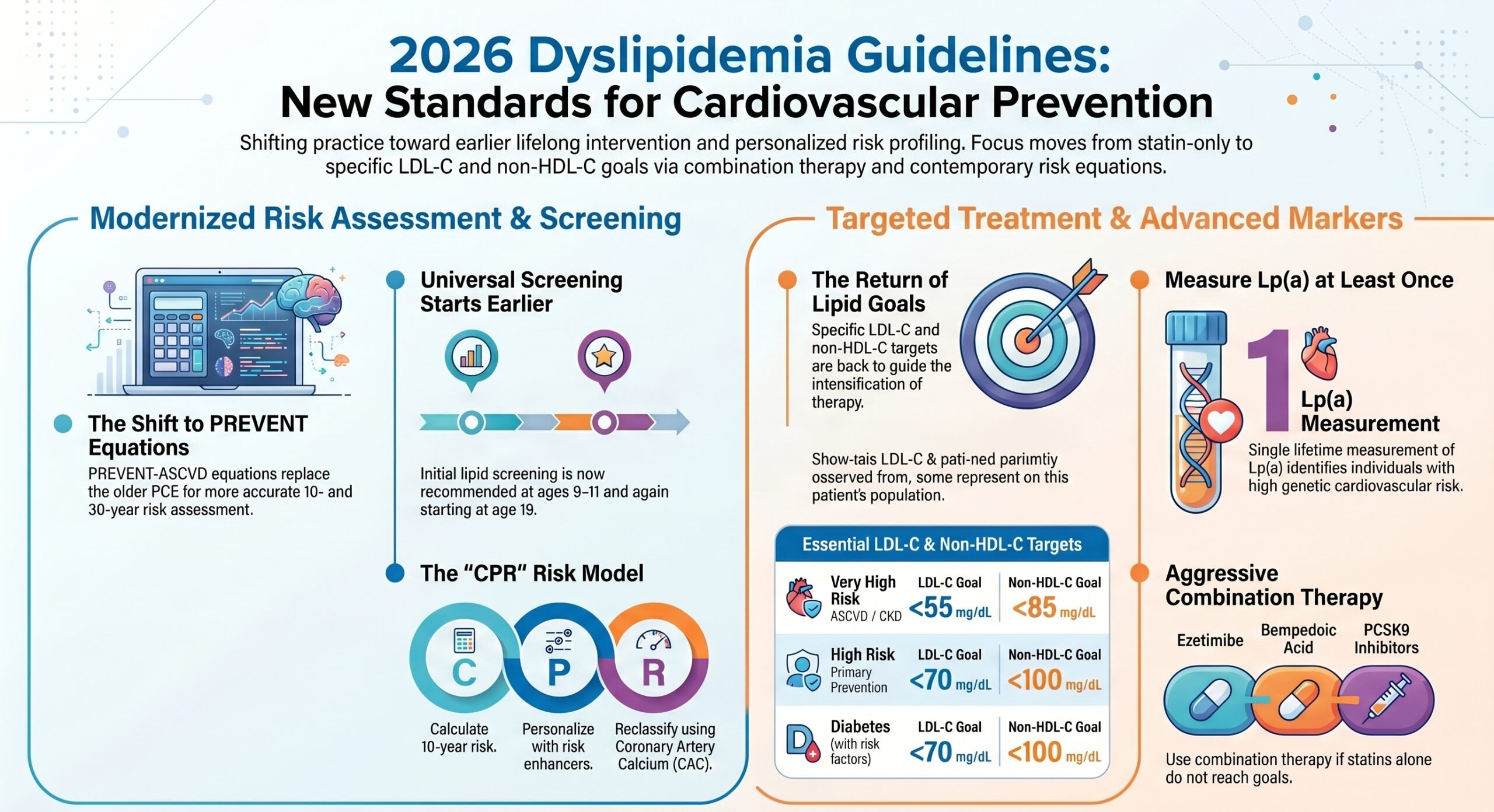
- Lipoprotein(a) — the critical genetic risk factor standard panels miss.
- Inflammatory & immune markers — hsCRP, MPO, Lp-PLA2, and oxidized LDL.
- Metabolic health — fasting insulin, glucose, and HbA1c.
- Hormonal panels when indicated — thyroid, cortisol, reproductive hormones.
- Genetic testing — FH risk, absorption vs. overproduction, and more.
- Vascular imaging (CAC, CIMT) to see whether cholesterol is actively building up.
A plan that matches your biology.
- Targeted nutrition informed by your metabolic and genetic profile.
- Anti-inflammatory protocols to reduce vascular inflammation and oxidative stress.
- Metabolic optimization for insulin resistance and body composition.
- Evidence-based supplementation — omega-3s, plant sterols, bergamot, berberine, niacin, CoQ10 where appropriate.
- Strategic pharmacotherapy — statins, ezetimibe, PCSK9 inhibitors — when the clinical picture warrants it.
- Hormonal support and stress / sleep optimization to address cortisol-driven disruption.
The statin question — and what statins leave behind.
Statins effectively lower LDL and reduce heart attack and stroke risk in high-risk patients. But they address only part of the problem. Cholesterol lowering accounts for roughly 25–30% of the risk reduction statins provide — a significant 70–75% of residual risk remains even among patients faithfully taking their medication. That residual risk is driven by inflammation, insulin resistance, oxidative stress, hormonal imbalances, and vascular dysfunction.
For some patients a statin is the right choice; for others it may not be necessary if root causes are effectively managed; and for many, the most effective plan involves both, targeted to their individual biology. When medication is part of the plan, we use it thoughtfully — monitoring for side effects, adjusting by biomarker response, and working toward the least medication needed for optimal protection.
Cholesterol & Lp(a), answered.
01 My LDL is high, but I eat a very healthy diet. What’s going on? +
02 What’s the difference between “good” and “bad” cholesterol? +
03 Should I be tested for Lp(a)? +
04 Can high cholesterol be managed without medication? +
05 I’ve been on a statin for years and my numbers look good. Do I still need advanced testing? +
06 Does menopause affect cholesterol? +
Get the complete picture of your cholesterol.
If you’ve been told you have high cholesterol, if your numbers haven’t improved despite treatment, if you have a family history of heart disease, or if you’ve never been tested for Lp(a), we can help you get the complete picture. Our advanced evaluation shows you exactly what your cholesterol is doing, why, and what needs to happen to protect your arteries for the long term.
Free, no-obligation discovery call. · Call or text 877-511-5166
Speak with a Human →
EVIDENCE
Sources & Citations
+
Lipoprotein(a)
- Reyes-Soffer G, Ginsberg HN, Berglund L, et al. Lipoprotein(a): A Genetically Determined, Causal, and Prevalent Risk Factor for ASCVD: A Scientific Statement From the AHA. Arterioscler Thromb Vasc Biol. 2022;42(1):e48–e60.
- Tsimikas S. A Test in Context: Lipoprotein(a): Diagnosis, Prognosis, Controversies, and Emerging Therapies. J Am Coll Cardiol. 2017;69(6):692–711.
- Tsimikas S, Marcovina SM. Ancestry, Lipoprotein(a), and Cardiovascular Risk Thresholds: JACC Review Topic of the Week. J Am Coll Cardiol. 2022;80(9):934–946.
- Patel AP, Wang M, Pirruccello JP, et al. Lp(a) Concentrations and Incident Atherosclerotic Cardiovascular Disease. Arterioscler Thromb Vasc Biol. 2021;41(1):465–474.
Lipid Particles, ApoB & Residual Risk
- Cole TG, Contois JH, Csako G, et al. Association of Apolipoprotein B and NMR-Derived LDL Particle Number With Outcomes in 25 Clinical Studies. Clin Chem. 2013;59(5):752–770.
- Durrington P. Dyslipidaemia. Lancet. 2003;362(9385):717–731.
- Jellinger PS, Handelsman Y, Rosenblit PD, et al. AACE/ACE Guidelines for Management of Dyslipidemia and Prevention of Cardiovascular Disease. Endocr Pract. 2017;23(Suppl 2):1–87.
- Yanai H, Adachi H, Hakoshima M, Katsuyama H. Molecular Biological and Clinical Understanding of the Statin Residual Cardiovascular Disease Risk. Int J Mol Sci. 2022;23(7):3418.
- Hoogeveen RC, Ballantyne CM. Residual Cardiovascular Risk at Low LDL: Remnants, Lipoprotein(a), and Inflammation. Clin Chem. 2021;67(1):143–153.
- Mechanick JI, Farkouh ME, Newman JD, Garvey WT. Cardiometabolic-Based Chronic Disease, Adiposity and Dysglycemia Drivers: JACC State-of-the-Art Review. J Am Coll Cardiol. 2020;75(5):525–538.
Inflammation & Atherosclerosis
- Henein MY, Vancheri S, Longo G, Vancheri F. The Role of Inflammation in Cardiovascular Disease. Int J Mol Sci. 2022;23(21):12906.
- Hansson GK. Inflammation, Atherosclerosis, and Coronary Artery Disease. N Engl J Med. 2005;352(16):1685–1695.
- Libby P. Inflammation During the Life Cycle of the Atherosclerotic Plaque. Cardiovasc Res. 2021;117(13):2525–2536.
- Zhao TX, Mallat Z. Targeting the Immune System in Atherosclerosis: JACC State-of-the-Art Review. J Am Coll Cardiol. 2019;73(13):1691–1706.
- Pothineni NVK, Karathanasis SK, Ding Z, et al. LOX-1 in Atherosclerosis and Myocardial Ischemia: Biology, Genetics, and Modulation. J Am Coll Cardiol. 2017;69(22):2759–2768.
Familial Hypercholesterolemia & Menopause
- Brandts J, Ray KK. Familial Hypercholesterolemia: JACC Focus Seminar 4/4. J Am Coll Cardiol. 2021;78(18):1831–1843.
- Sturm AC, Knowles JW, Gidding SS, et al. Clinical Genetic Testing for Familial Hypercholesterolemia: JACC Scientific Expert Panel. J Am Coll Cardiol. 2018;72(6):662–680.
- Beheshti SO, Madsen CM, Varbo A, Nordestgaard BG. Worldwide Prevalence of Familial Hypercholesterolemia: Meta-Analyses of 11 Million Subjects. J Am Coll Cardiol. 2020;75(20):2553–2566.
- El Khoudary SR, Aggarwal B, Beckie TM, et al. Menopause Transition and Cardiovascular Disease Risk: A Scientific Statement From the AHA. Circulation. 2020;142(25):e506–e532.
- Nappi RE, Chedraui P, Lambrinoudaki I, Simoncini T. Menopause: A Cardiometabolic Transition. Lancet Diabetes Endocrinol. 2022;10(6):442–456.
Learn More
Guides
Articles
-

New Cholesterol Guidelines 2026: LDL Targets, Lp(a), and What Changed
Coronary Artery DiseaseHigh Cholesterol & Lp(a) The 2026 ACC/AHA Dyslipidemia Guideline introduces five major changes: a new risk calculator (PREVENT…
-

How Do I Lower My Lp(a) Cholesterol?
High Cholesterol & Lp(a) Lipoprotein(a), or Lp(a), is one of the most important and most overlooked cardiovascular risk factors. Unlike…
-

Omega-3 Fatty Acids and Heart Health: Evidence, Dosing, and the REDUCE-IT Trial Explained
Coronary Artery DiseaseHeart Attack PreventionHeart DiseaseHigh Cholesterol & Lp(a) Omega-3 fatty acids for heart health represent the most extensively studied…